Wellness-focused interior design for homes that support real life
A well-designed home should do more than look beautiful. It should support how you rest, gather, work, sleep, cook, move and recover at the end of each day.
At KINDLY, our wellness-focused interior design approach is shaped around the quiet connection between home and wellbeing. We design refined, organic interiors that feel calm, practical and deeply personal, with considered attention to light, layout, texture, natural materials, airiness, acoustics, storage, comfort and daily rhythm.
Based in Oxfordshire and working across the Cotswolds, Berkshire, Buckinghamshire, Gloucestershire and Wiltshire, we create homes that bring together beauty, ease and a softer sense of luxury. Every decision is made with feeling as well as function in mind, so your home supports the way you want to live, not just the way you want it to look.
What is wellness - focused interior design?
Wellness-focused interior design considers the effect your surroundings have on your body, mind and everyday experience. It looks at how a home can support rest, clarity, connection and comfort through thoughtful design choices.
This might mean improving natural light in the rooms you use most, creating a calmer flow between spaces, choosing breathable natural materials, softening acoustics, reducing visual clutter, improving storage, introducing more tactile surfaces, or designing bedrooms and bathrooms that actively support rest.
For KINDLY, wellness-focused design is not about creating a spa-like show home. It is about designing a home that feels grounded, useful, layered and restorative. A home that can hold family life, hosting, quiet mornings, busy weekdays and slow weekends with equal ease.
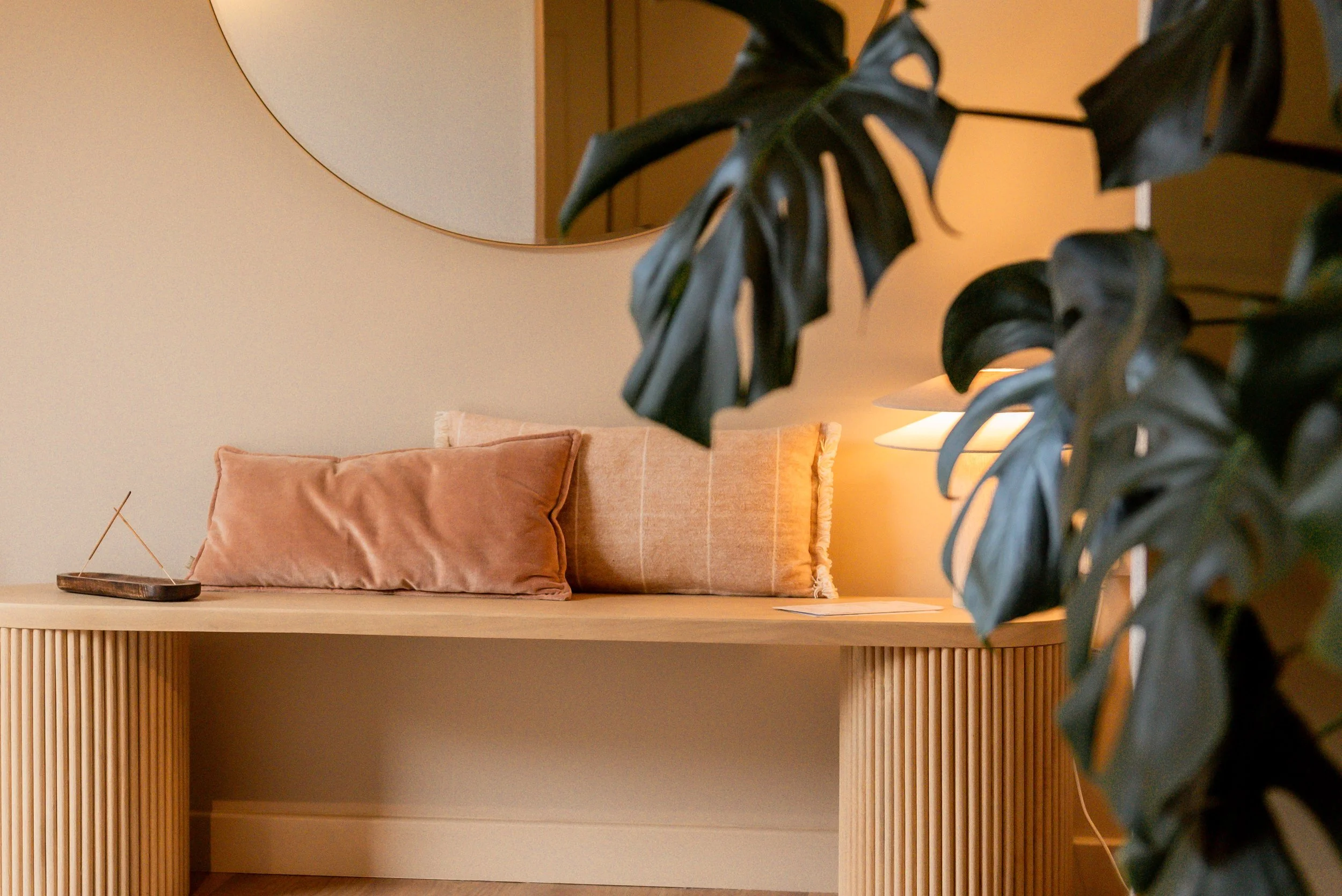
THE ATRIUM: WELLNESS INTERIOR DESIGN PROJECT
Our work for The Atrium Wellness Collective explored many of the same principles in a commercial setting: natural light, softness, privacy, pause, flow and a sense of calm arrival.
While every private home is different, the thinking is similar. A space should not simply look beautiful. It should help people feel held, comfortable and at ease.
How we design homes with wellbeing in mind
We begin by understanding how you live now and how you want your home to feel. We look closely at your daily routines, pressure points, sensory preferences and the practical needs of the people who share the space.
From there, we consider the whole experience of the home.
Light and atmosphere
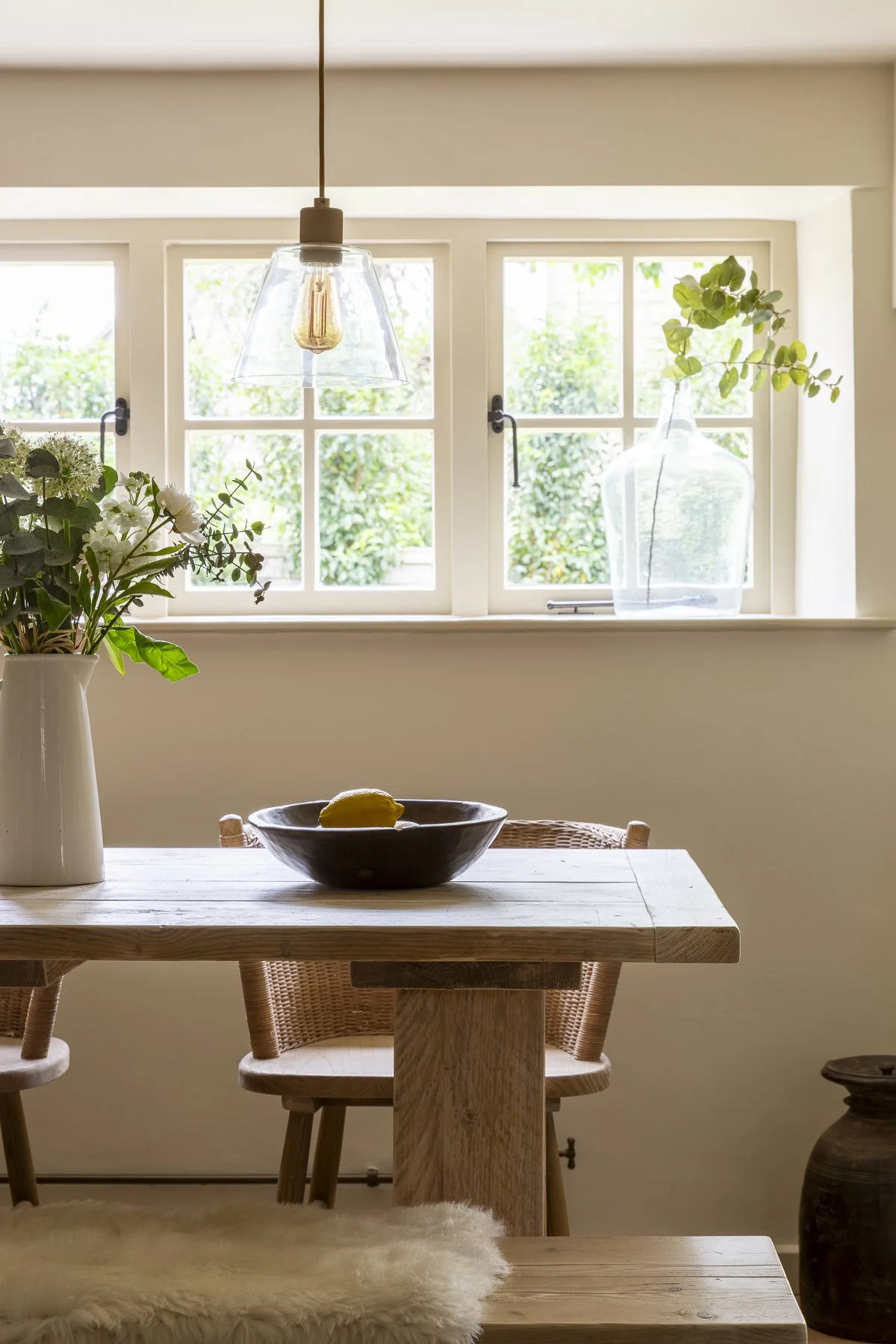
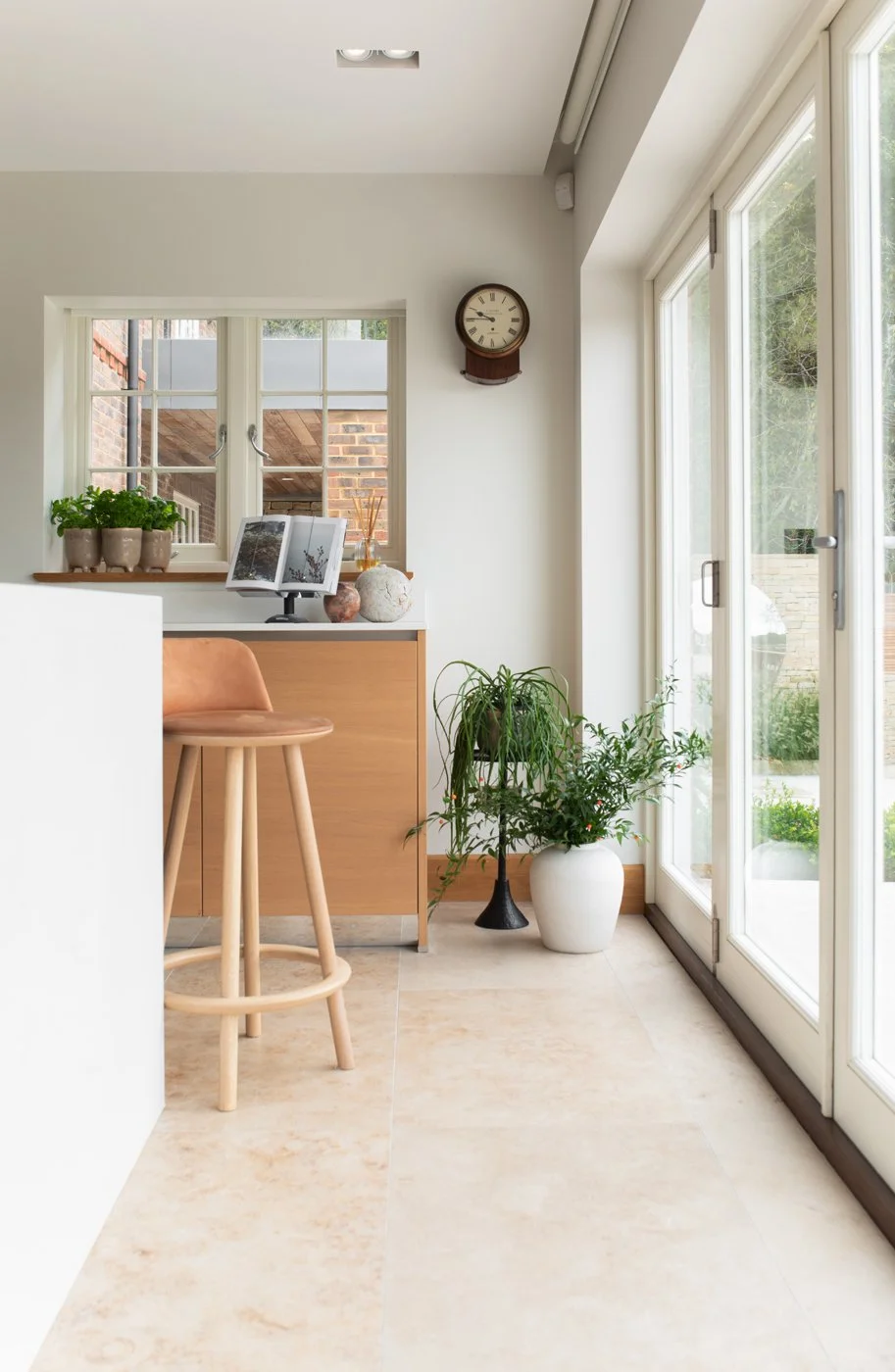
Natural light has a profound effect on how a room feels. We consider the movement of light throughout the day, how it lands on materials, where warmth is needed and where softness matters most.
Window treatments, artificial lighting, reflective surfaces and colour temperature are all chosen to create spaces that feel gentle, balanced and comfortable.
Natural materials and tactile detail
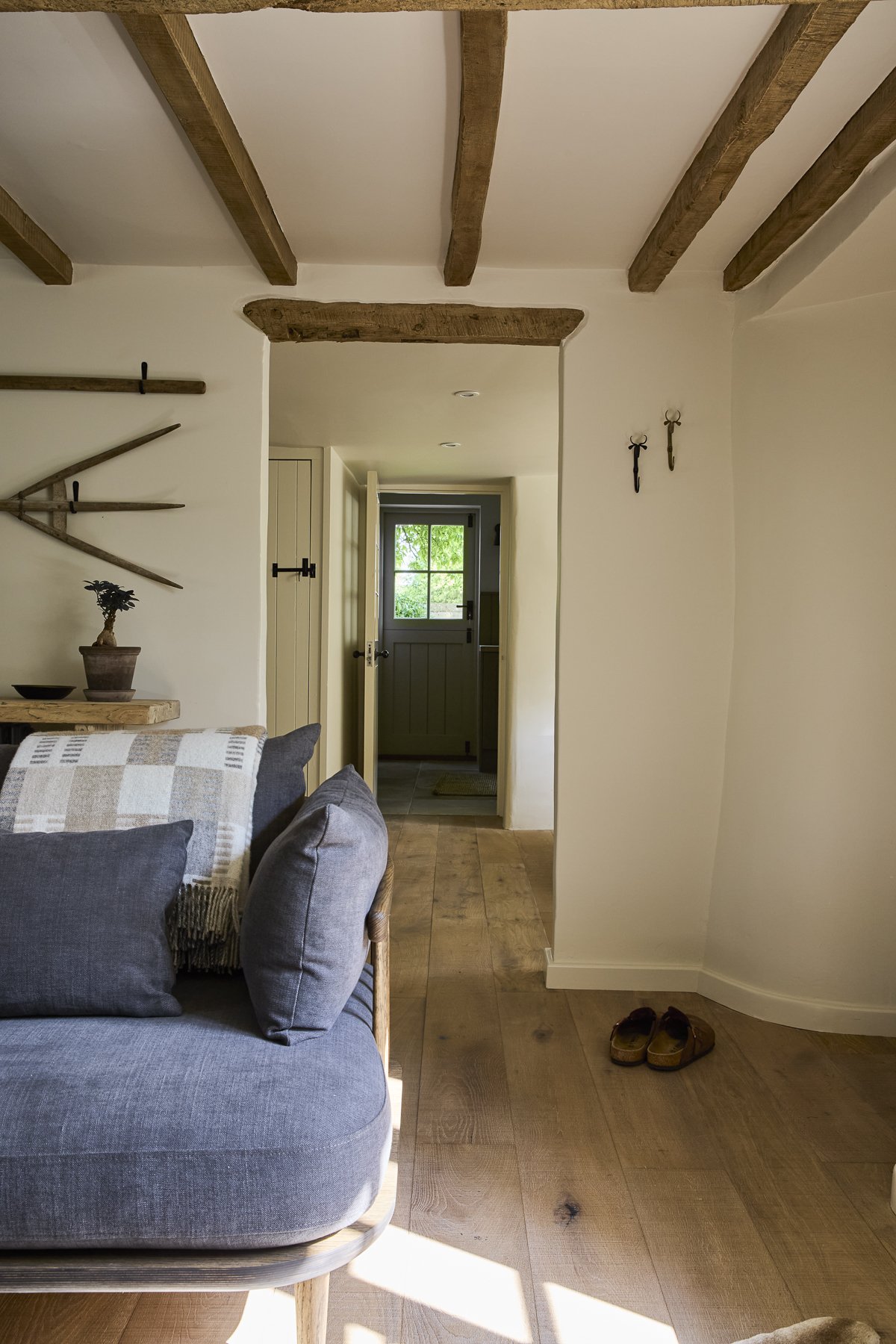
We favour materials with depth, honesty and longevity. Timber, stone, wool, linen, limewash, clay, rattan, ceramic, leather and natural fibres bring texture and warmth to a home. These materials age well, feel good to touch and create an atmosphere that is calm and nurturing.
Flow and layout
A beautiful home can still feel stressful if the layout does not work. We design with movement, storage, sightlines and daily routines in mind, creating spaces that feel intuitive and easy to live in. This might include a more considered kitchen layout, a calmer entrance, a better connection between inside and outside, or a bedroom that feels protected from the busier parts of the home.
Restorative bedrooms and bathrooms
Bedrooms and bathrooms have a direct role in how we rest, reset and begin the day. We design these spaces with particular care, considering lighting levels, storage, colour, texture, warmth, privacy, acoustics and comfort. The aim is not excess, but a sense of quiet support.
Reduced visual noise
Wellness at home is often helped by clarity. We use intelligent storage, restrained palettes, thoughtful styling and considered furniture placement to reduce clutter without stripping away character. The result is a home that feels layered and lived-in, yet still calm.
Connection to nature
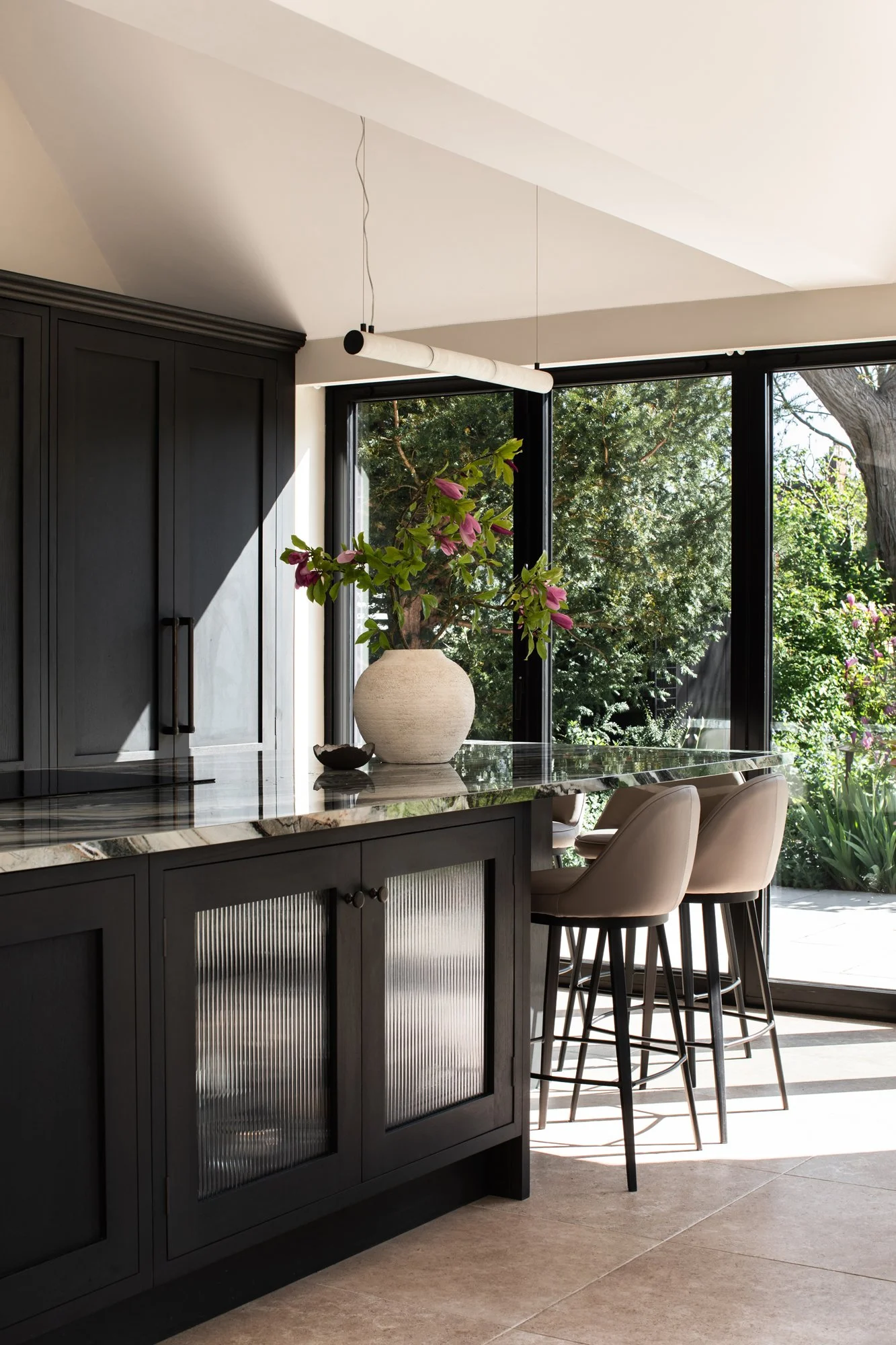
Where possible, we strengthen the relationship between the interior and the natural world, because even a visual connection to nature can have a meaningful effect on how a space feels. NASA has observed this in an unusually clear way through astronauts on the International Space Station, where photographing and looking back at Earth has been found to support crew members’ mental wellbeing during long periods in an enclosed, highly controlled environment.
In a home, this connection may be much quieter, but no less important. We might draw attention to views, introduce planting, use natural materials, earthy tones and organic forms, improve the flow between inside and out, or shape garden-facing rooms so they feel more connected to the landscape beyond. Sometimes it is as simple as a palette, texture or line of sight that helps a room feel rooted in its surroundings.
If this approach resonates with you
Wellness-focused interior design is not a separate service at KINDLY. It is part of how we approach every project.
We consider how your home feels and functions day to day: the flow between rooms, the quality of light, the materials you touch, the storage you need, and the balance between family life, hosting and rest.
This may feel relevant if your home looks good in places but does not yet feel calm, connected or easy to live in. You may want better layout, softer lighting, more natural materials, less visual clutter, or spaces that simply work harder for real life.
If that sounds like the kind of home you want to create, get in touch for an initial chat.