
How Much Does an Interior Designer Cost for a Cotswolds Renovation?
If you are planning a substantial renovation in the Cotswolds, the interior design fee is likely to be one of several professional costs you need to allow for alongside the architect, structural engineer, contractor and other specialists. But interior design fees are not especially easy to compare.

One designer may be providing a concept and furniture specification. Another may be working alongside your architect from the early planning stages, developing layouts, specifying every internal finish, designing joinery, sourcing furniture and lighting, coordinating suppliers and remaining involved until the final installation.
Those are very different services.
For a substantial renovation, it is realistic to think of professional interior design fees in the tens of thousands of pounds rather than a few thousand, with the final figure depending on the size of the property, complexity of the work and how much responsibility the designer takes on.
If you are still at the stage of deciding what level of support you need, our guide to choosing an interior designer in the Cotswolds explains what to look for beyond style alone.
How are interior design fees usually calculated?
There is no standard way for interior designers in the UK to charge.
Some studios work on an hourly or daily rate. Others charge a percentage of the overall project spend, while many established practices use a fixed design fee based on a clearly defined scope.
For larger renovations, you may also see separate charges for procurement, project coordination or installation.
This is why comparing two headline figures rarely tells you very much. The more useful question is what is actually included within the fee?
At Kindly, we calculate our design fees around the scope and complexity of each project. A whole-house renovation involving architectural coordination, detailed design, bespoke elements and furnishing naturally requires a different level of work from decorating several rooms within an otherwise completed house.
You can read more about the type of projects we take on through our interior design service in the Cotswolds.
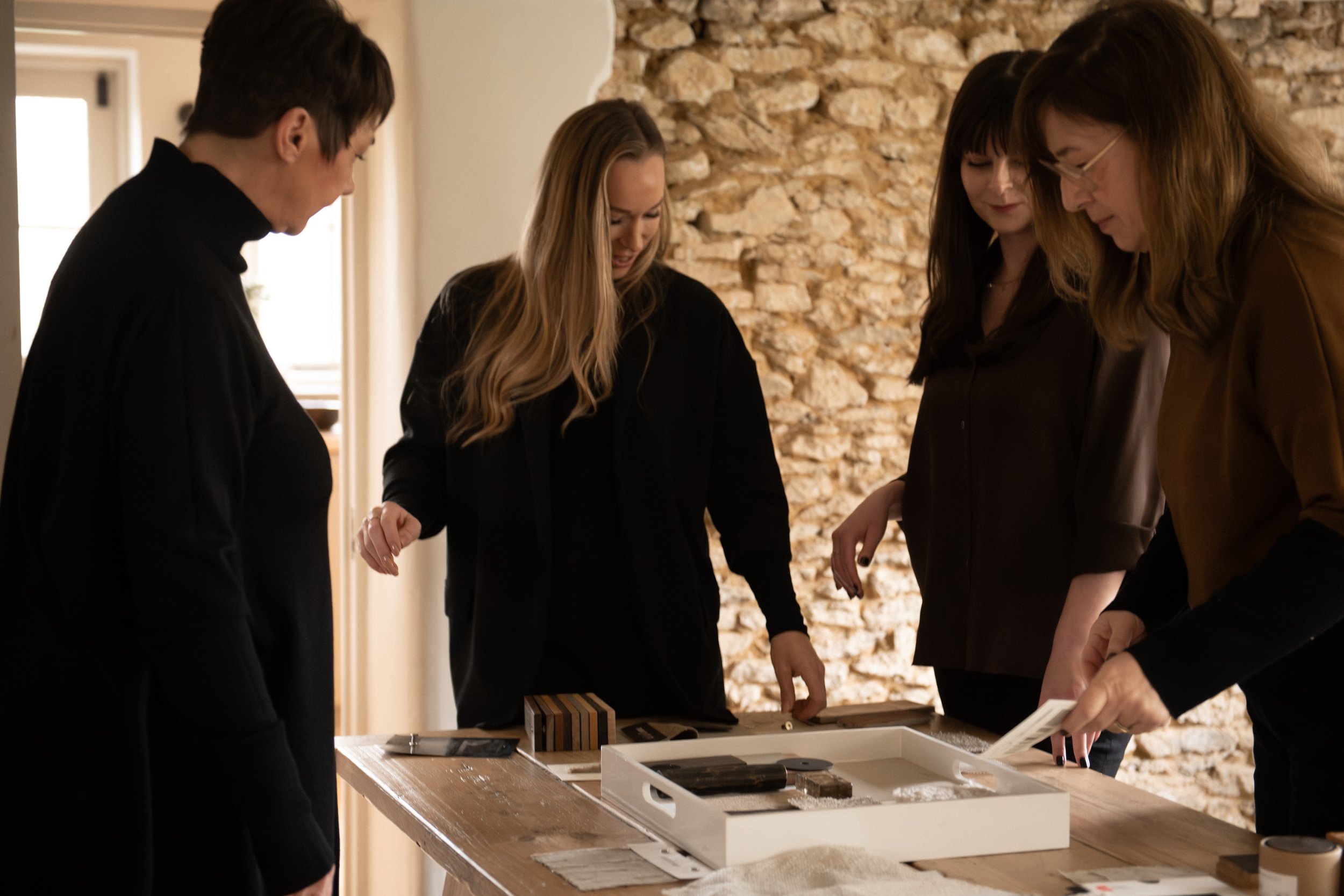
What does a full interior design service actually cover?
On a substantial Cotswolds renovation, the designer's role often begins well before anyone starts choosing fabrics.
Early decisions might include how rooms connect, where furniture will sit, whether an existing doorway is in the right place, how lighting relates to the furniture layout, where joinery is required and how the kitchen, bathrooms and architectural finishes should work together.
As the project develops, that can extend into:
spatial planning and furniture layouts
internal finishes and material specifications
bathroom and kitchen design direction
flooring
decorative lighting
bespoke joinery
paint colours and wall finishes
furniture, antiques and upholstery
window treatments
artwork and accessories
supplier and maker liaison
procurement
site queries and design coordination
installation and final styling
For a large house, there can be hundreds of individual decisions sitting behind the finished rooms.
The fee reflects both the creative work and the less visible process required to make those decisions work together.
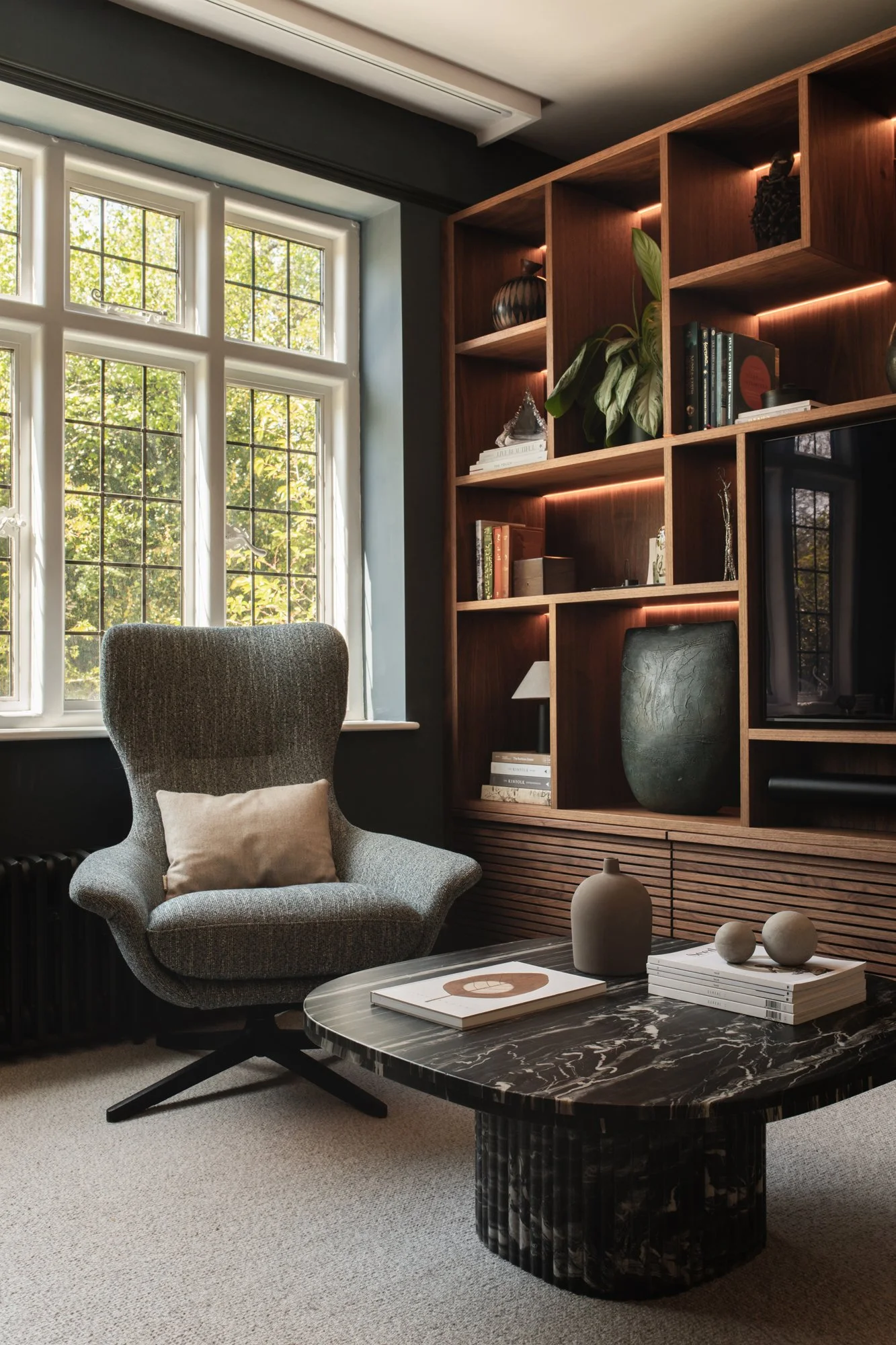
Why can a Cotswolds renovation require more design input?
Many of the houses we work with in the Cotswolds have evolved over decades or centuries.
You may be dealing with uneven floors, deep stone walls, awkward changes in level, low beams, later additions or rooms whose original purpose bears little resemblance to how a family wants to live today.
Listed buildings introduce another layer of consideration.
The answer is rarely to erase those irregularities. Often the most successful work comes from understanding which parts of the building give it its character, then working carefully around them. That takes time. A beautifully worn stone floor might be worth retaining. An old fireplace may establish the proportions of a room but leave an awkward area beside it that needs a piece of bespoke joinery. A new extension might require a different material language while still feeling connected to the older house.
Good design on these projects is often about resolving those relationships rather than simply specifying more expensive things.
Our Cotswolds interior design page looks in more detail at how we approach characterful homes, renovations and extensions across the area.
The size of the house is only part of the calculation
A five-bedroom house does not necessarily require twice the design work of a three-bedroom house. The level of intervention matters just as much.
A project where the architecture is already resolved and the brief is predominantly furnishing will be quite different from one involving a new kitchen, several bathrooms, bespoke joinery, lighting layouts, architectural finishes and furniture throughout.
The client's requirements matter too. Designing for a family with young children, dogs and frequent guests brings different practical questions from designing a second home used mainly at weekends. Storage, circulation, durability, lighting and furniture placement all need to respond to how the house will actually be lived in.
This is why we prefer to understand the project properly before preparing a fee proposal.
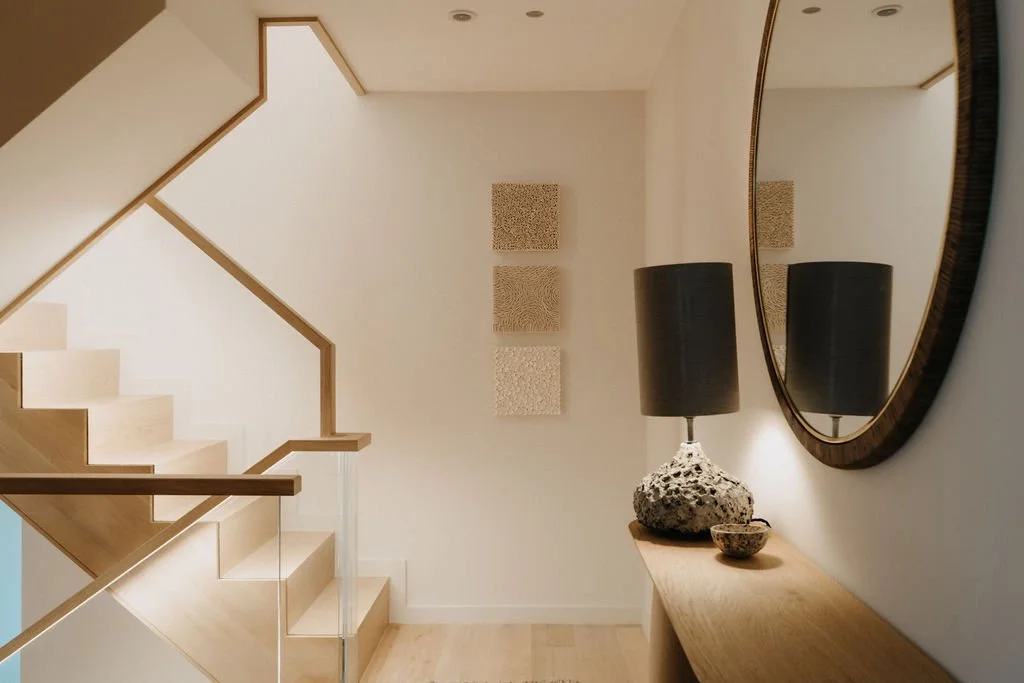
What sits outside the interior design fee?
This is one of the most important distinctions to understand when setting a renovation budget.
The design fee is not the total project cost.
Depending on the project, you may also need to budget separately for building works, architectural and engineering fees, planning or Listed Building Consent, kitchens and bathrooms, flooring and stone, bespoke joinery, decorative lighting, furniture, window treatments, artwork, delivery, storage and installation. There may also be an ongoing coordination or implementation fee while work is taking place. With a substantial project, we think it is much more useful to establish an overall cost plan early than to decide on an arbitrary furniture or design allowance in isolation.
A beautifully designed room still needs enough budget behind it to execute the idea properly.
What about furniture and procurement?
Furniture can represent a significant proportion of the overall investment, particularly if you are furnishing a complete house.
A considered scheme may combine new pieces, antiques, upholstery, commissioned joinery, lighting, rugs and objects rather than sourcing everything from one level of the market.
Procurement itself is also a substantial piece of work. Before something arrives in a room, somebody needs to confirm dimensions and finishes, obtain quotations, place the order, check acknowledgements, monitor lead times, resolve discrepancies, coordinate delivery and make sure it is in the right place at installation.
Studios structure this differently, so when reviewing a proposal it is worth asking how procurement is charged and whether supplier discounts or mark-ups are clearly explained. For a whole house, procurement can involve dozens or even hundreds of individual orders, each with its own lead time, finish, delivery requirement and point of coordination.
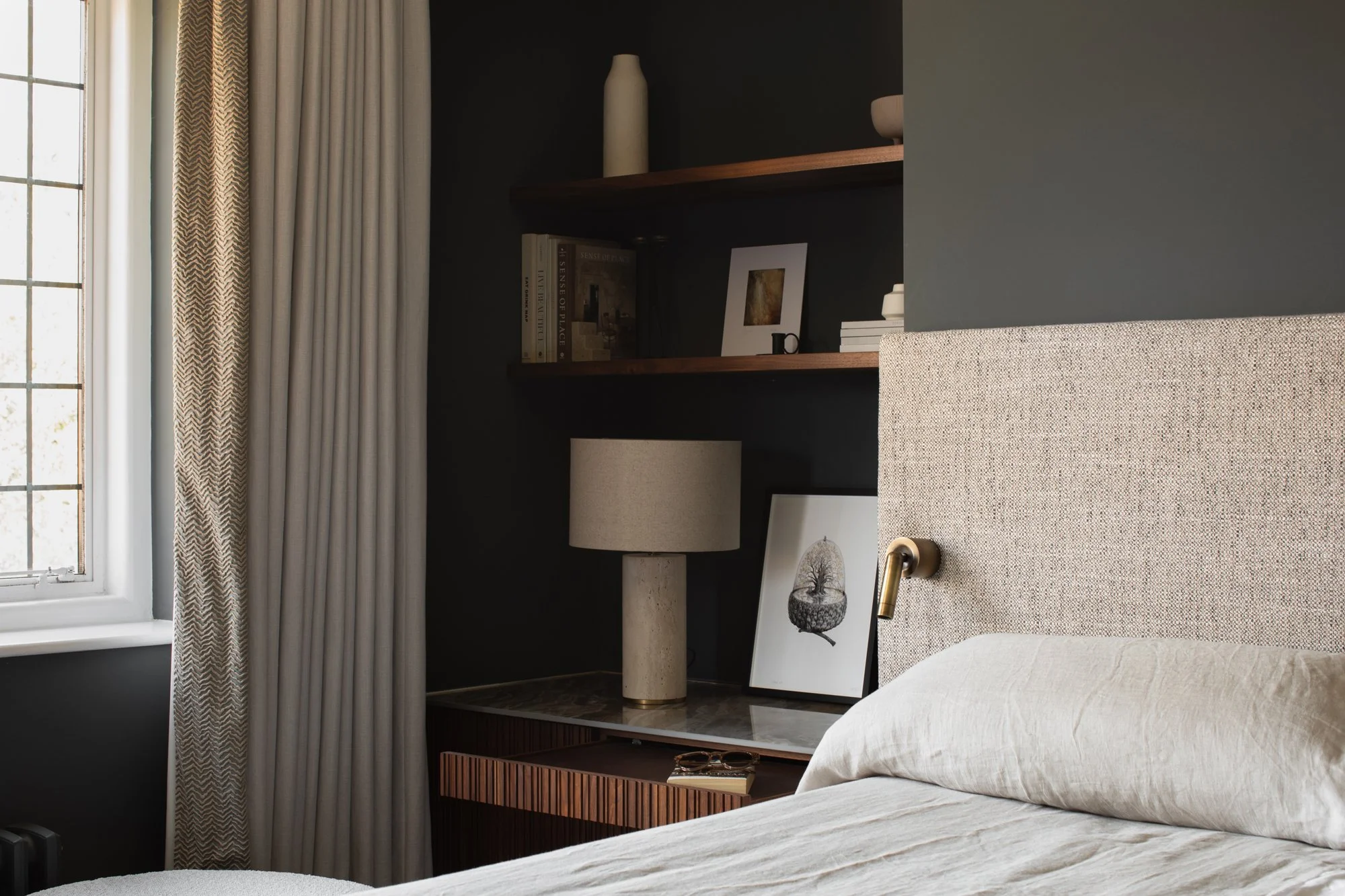
When should you speak to an interior designer?
Earlier than many homeowners expect.
If you are renovating or extending a house, bringing the interior designer into the project while architectural decisions are still open gives them much more opportunity to influence the way the finished home works.
A sofa layout may affect electrical positions. A dining table can influence the location of a pendant. A piece of joinery may require alterations to a wall. The relationship between a kitchen and adjoining living space is much easier to resolve on a drawing than after the walls have been built.
By the time construction is well underway, some of the most important interior decisions may already have been made by default.
If you are still considering when to appoint a studio, our Cotswolds interior design service explains how we work across renovations, extensions, new builds and complete furnishing projects.
So, how much should you budget?
For a substantial Cotswolds renovation, there is no particularly useful single figure.
The more realistic approach is to think about the scale of the entire project, then establish how much design involvement you need.
For a complete renovation or full furnishing project, professional design fees are likely to form a meaningful part of the overall budget. On larger houses, those fees can comfortably reach five figures and increase further where the designer remains closely involved through procurement, site coordination and installation.
What matters is understanding precisely what that figure covers.
When comparing proposals, look beyond the fee itself. Consider the rooms included, the level of drawing and specification, whether bespoke elements are being designed, how much coordination is included, who handles purchasing and what happens once work begins on site.
A clear scope at the beginning makes both the design fee and the wider renovation budget much easier to understand.
Kindly is an interior design studio based in Burford, working across the Cotswolds and Oxfordshire on substantial renovations, extensions, new builds and complete furnishing projects.
If you are at the early stages of a Cotswolds renovation, you can explore our Cotswolds interior design service or get in touch about your project.
