
Luxury Holiday Home Interior Design: Lessons from Fowey Townhouse
A luxury holiday home should feel different from everyday life, but it should still feel unmistakably like a home.
That balance shaped our approach to Fowey Townhouse, a family holiday property overlooking the estuary in Cornwall.
The owners already had another home designed by Kindly, but they did not want to repeat the same interior language. Where the first property embraced richer textures and deeper tones, Fowey needed to offer something quieter: a place associated with the coast, slower days and time spent together.
Rather than beginning with an idea of what a coastal holiday home should look like, we began with how the owners wanted this particular house to feel.
That distinction informed almost every decision that followed.
Give a second home its own identity
When clients own more than one property, there can be a temptation to recreate what they already know works.
We think a second home is more interesting when it responds to its own location, architecture and purpose.
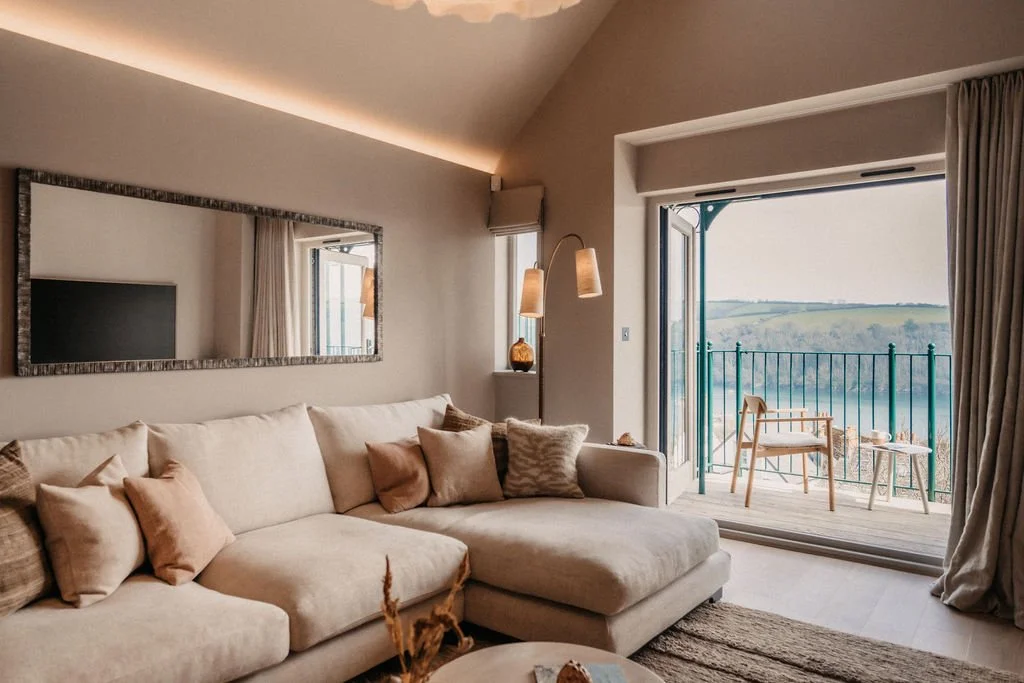
At Fowey, the brief was for a calmer family retreat. The estuary is visible from the house and changes constantly with the weather, tides and light, so the interior did not need an overt coastal theme to establish where it was.
Instead, the palette became quieter.
Pale oak, tactile fabrics, natural textures and restrained colours created a softer backdrop to the views. The house feels connected to Cornwall without relying on predictable blue-and-white schemes or decorative references to the seaside.
For a luxury holiday home, that sense of place is far more compelling than applying a style that could have been used anywhere.
If you are at an earlier stage, we have also written about what to consider before furnishing a luxury holiday home, including guest use, durability, storage and where to invest.
Let the location shape the interior
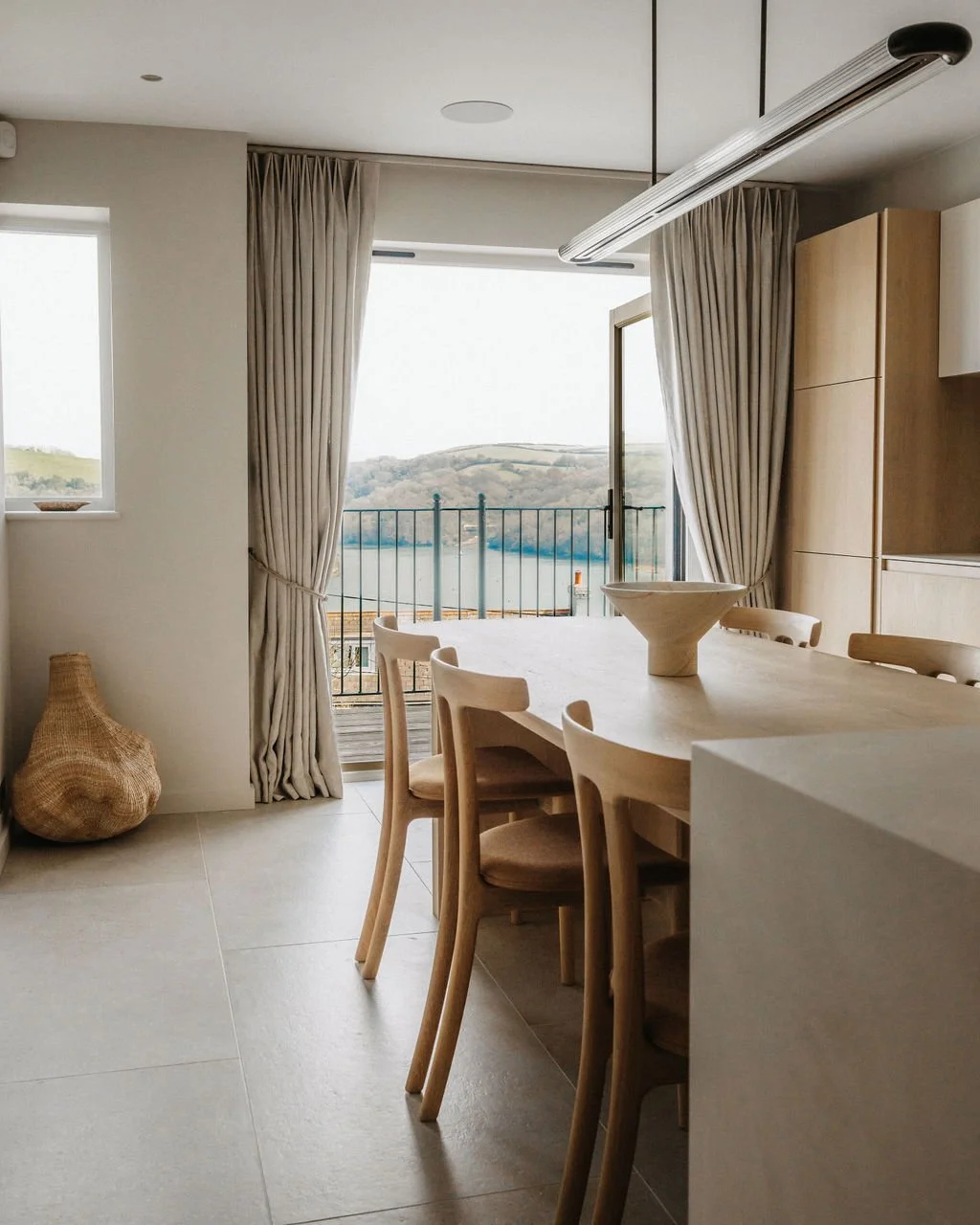
One of the strongest qualities of Fowey Townhouse is its relationship with the view.
Working alongside MortonScarr Architects, the property was reconfigured so that the architecture opens towards the estuary, with vaulted ceilings and carefully considered volumes making the interior feel more expansive. Our role was to make sure the interior continued that relationship. Furniture needed to work with the outlook rather than interrupt it. Materials had to sit comfortably in the changing natural light. Window treatments needed to soften the rooms without competing with what was beyond them. This is something we consider in any second home with a strong setting.
Where will you naturally sit in the morning? What do you see from the dining table? Is a piece of furniture blocking the best sightline in the room? Does the interior become more interesting as the light changes throughout the day?
A view should not simply be something framed by a window. It can become part of how the entire room is planned.
Luxury does not need to mean formality
Holiday homes are places where people should be able to relax, which can be at odds with an interior that feels overly precious.
At Fowey, we wanted the rooms to have depth and material quality while remaining easy to use as a family. There are beautifully made pieces and bespoke details, but the overall feeling is deliberately relaxed. This is often where natural materials work particularly well. Timber, stone, wool and textured fabrics have variation within them. They can withstand a degree of use without losing their character, and in many cases become more appealing as they age. For a second home, particularly one used by family and guests, this matters.
The aim is not to design an interior that remains untouched. It is to choose pieces and finishes that still look good once people have genuinely lived with them.
Consider architecture and furniture together
A successful whole-house interior rarely comes from treating architecture first and furniture later. This is central to our Full Service Interior Design approach, where spatial planning, finishes, lighting, joinery and furnishing are developed together.
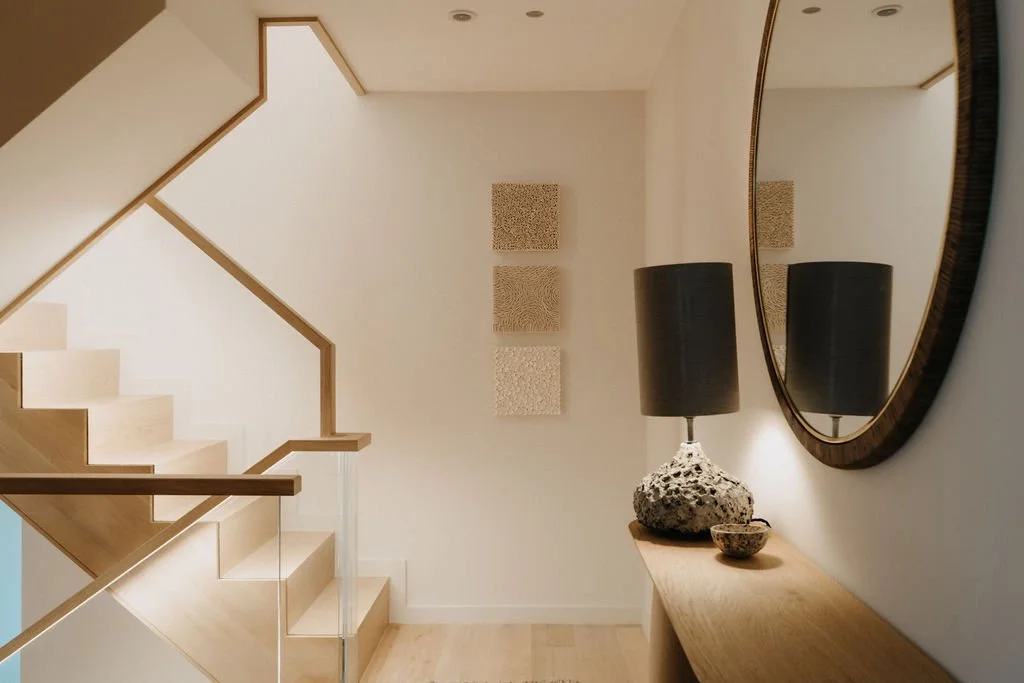
The two need to develop alongside one another. At Fowey, bespoke joinery, furniture layouts, lighting and architectural changes were considered as parts of the same composition. This allows practical decisions to feel much more integrated. Rather than asking where a cabinet can be added once the room is finished, we can consider what storage the space actually needs and how it should sit within the architecture. Rather than deciding on lighting independently, we can consider the furniture beneath it, the atmosphere required and how the room will be used after dark.
That coordination becomes particularly important in a holiday home, where the house needs to feel intuitive from the first day of a stay. Good design should quietly make things easier.
Resolving these relationships early is one of the reasons we recommend allowing a proper design period before construction begins. We explore this further in How Long Should You Allow for a Whole-House Renovation?
Choose fewer things, but choose them properly
Holiday properties are sometimes over-furnished in an attempt to make them feel complete.
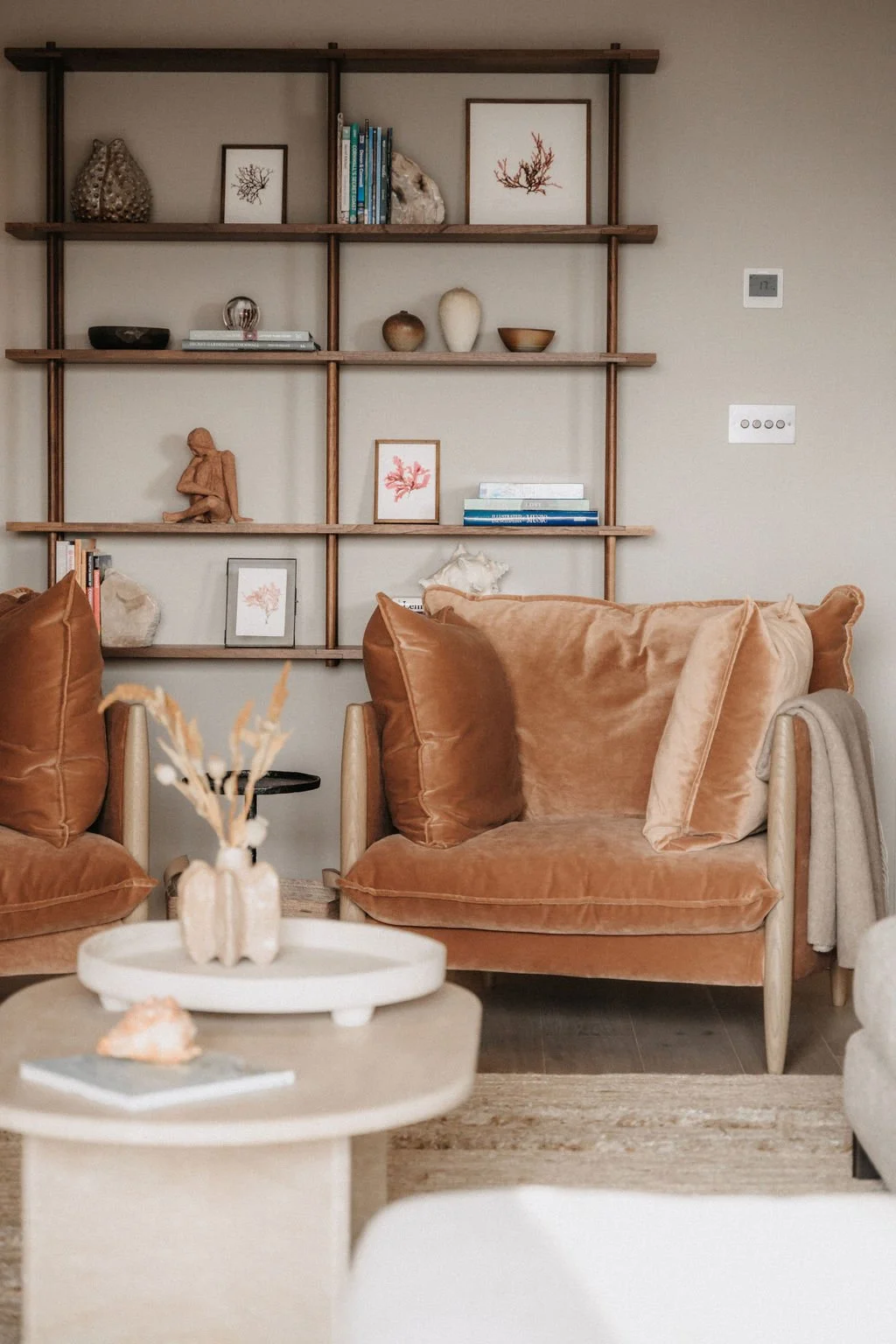
At Fowey, the sense of calm depended partly on resisting that. There is space around furniture. Individual pieces are allowed to have presence. Joinery is integrated rather than added wherever there happens to be an empty wall. The result is still layered and comfortable, but it is not visually busy.
For us, this is an important distinction in higher-end holiday-home design. Luxury is rarely created by adding more. A beautifully proportioned room, a good chair in the right position, a generous rug or a piece of art with enough space around it can create far more impact than filling every available corner.
It also gives guests somewhere for their own belongings to exist without immediately disrupting the room.
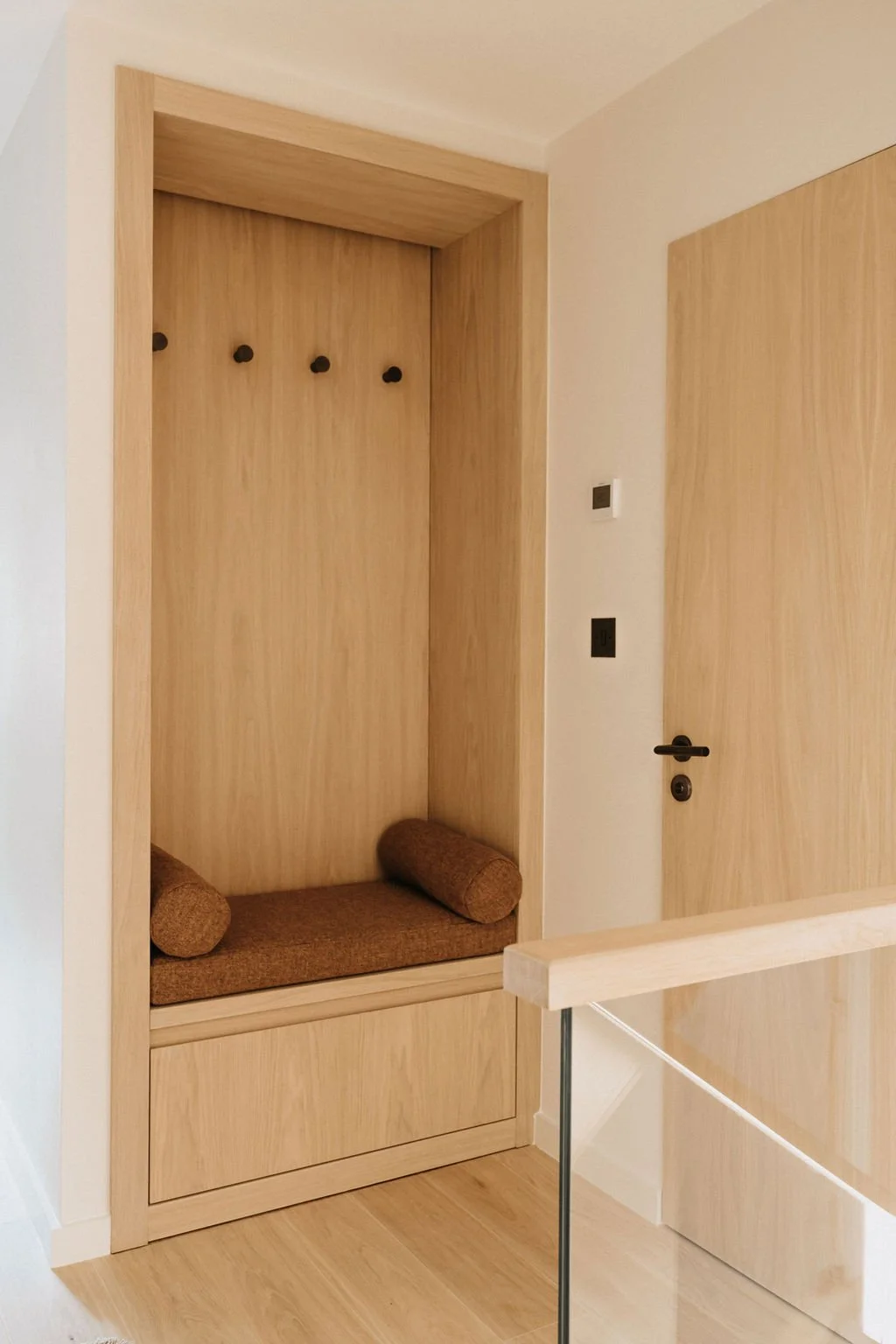
Use bespoke design where it earns its place
Not everything within a luxury holiday home needs to be bespoke. But there are places where designing something specifically for the property can resolve several problems at once.
Fowey includes bespoke joinery designed to work with the proportions and architecture of the rooms rather than simply filling them. Bespoke elements can provide storage, improve an awkward part of a plan, integrate technology or create a focal point that belongs uniquely to that house.
This is where we tend to concentrate investment, alongside pieces that are heavily used or expected to stay with the house for many years.
Art helps a holiday home feel established
One of the risks with newly furnished holiday properties is that they can feel complete but impersonal. Art, books, ceramics and objects help move a house beyond that point.
At Fowey, art was selected as part of the overall interior rather than added at the end simply to fill walls. This gives the property another layer of personality and helps it feel as though it belongs to someone. That is particularly important in a luxury second home.
Guests may be using the property, but the house should not feel anonymous. The strongest holiday homes retain a clear sense of their owners and their location. They feel borrowed, in the best possible sense, rather than manufactured for rental.
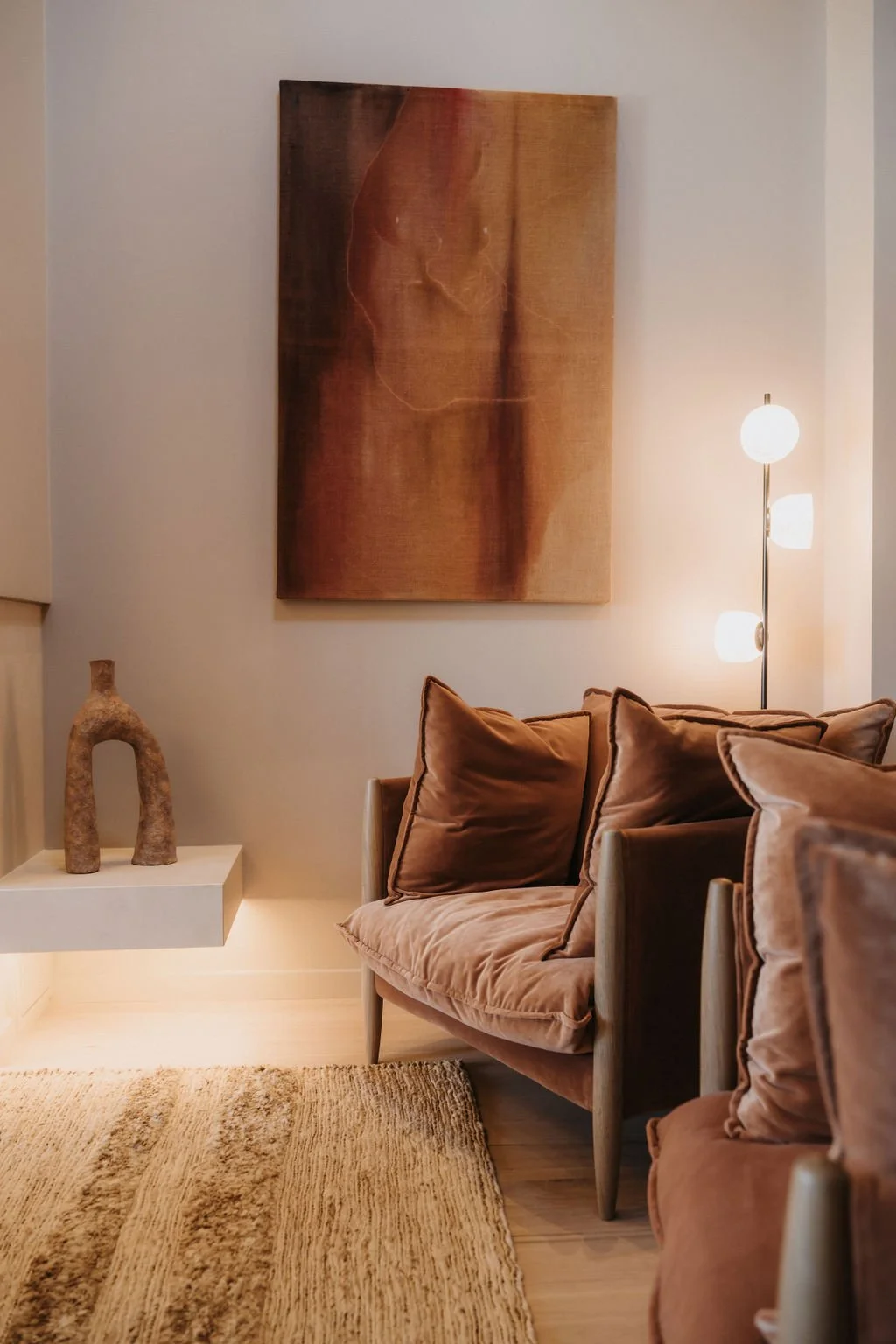
The most memorable luxury is often atmosphere
Fowey Townhouse received a Highly Commended award in the South West & Wales category at the BIID Interior Design Awards 2025.
The judges described the project as having a sense of “calm and restraint”, with harmony between the architecture and interior. That is probably the aspect of the project we value most too.
The success of a holiday home is not always found in one spectacular object or feature. It can be the feeling of arriving and immediately slowing down. The light across a room in the morning. Somewhere comfortable to sit and watch the estuary. Materials that feel good to touch. Rooms that are easy to move through and uncomplicated to use.
Those quieter qualities are difficult to capture on a specification sheet, but they are often what people remember.
Designing a holiday home as a real home
For us, Fowey demonstrates the difference between furnishing a property for holidays and designing a home that happens to be used for them. The practical demands still matter. Materials need to perform. Furniture needs to be comfortable. Storage needs to work. The house has to accommodate family life and regular use. But those considerations sit beneath the surface. What you experience is the architecture, the view, the materials, the art and the atmosphere they create together.
That is ultimately what we aim for in any second home: somewhere sufficiently considered to feel special, but sufficiently comfortable that you immediately feel able to live there.
Planning a second home or holiday property? Kindly works on complete residential interiors from early spatial planning and architectural coordination through to furniture, procurement, installation and styling.
