
When Should You Appoint an Interior Designer for a Renovation?
One of the most useful times to involve an interior designer is before the interior looks as though it needs designing.
For a substantial renovation, our work begins well before choosing paint colours, furniture or fabrics. Ideally, we become involved while the architectural plans are still developing and before lighting, electrical positions, plumbing and internal layouts have been finalised. This is something we explore more broadly in our guide to planning a Cotswolds renovation.
The reason is simple: many apparently architectural decisions are closely connected to how the finished rooms will actually be used.
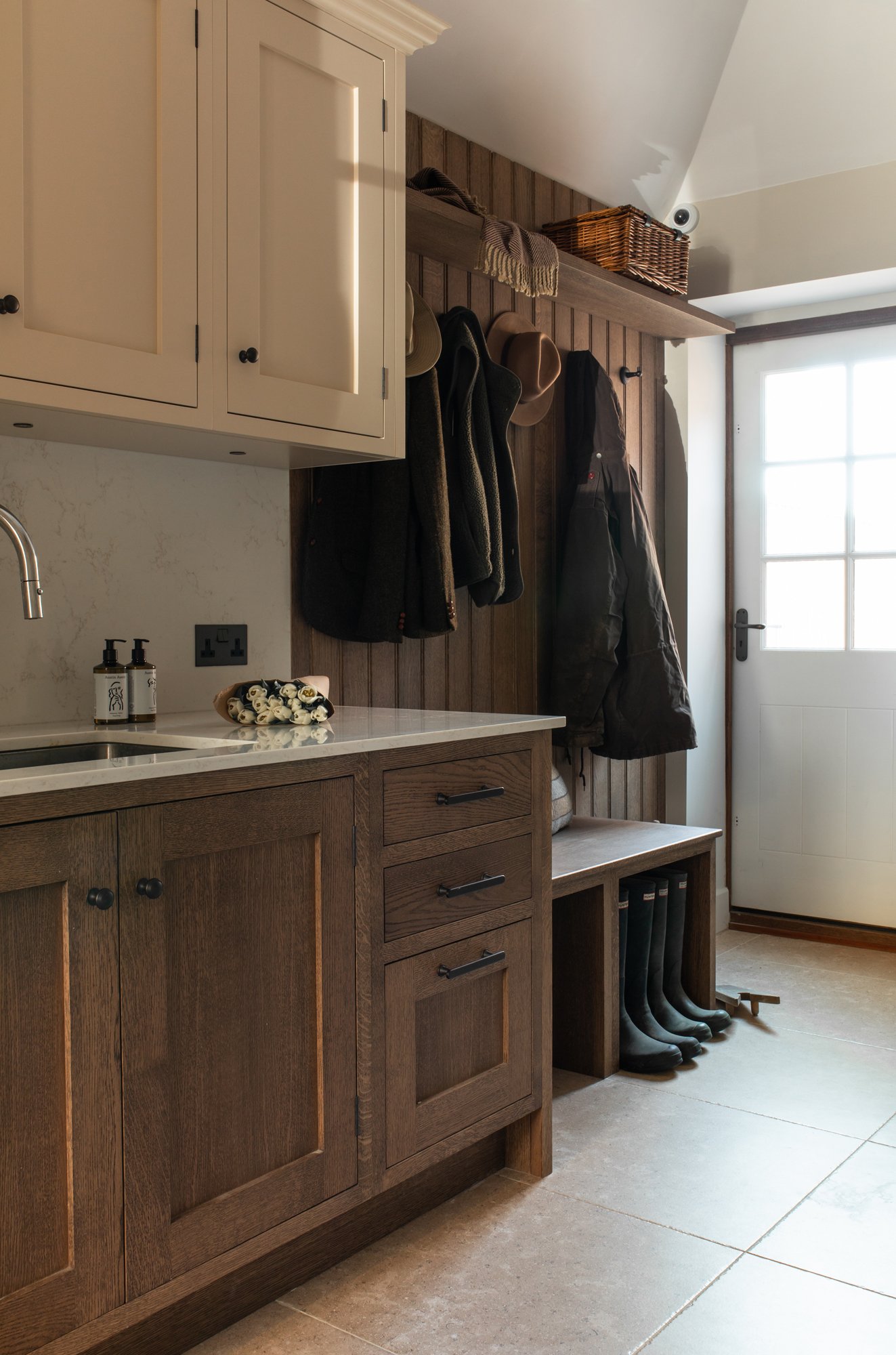
Why does an interior designer need to be involved so early?
Take the position of a doorway.
On an architectural plan it can appear to be a relatively small decision. Once furniture is introduced, however, moving that door by half a metre may determine whether a sitting room can comfortably accommodate two sofas, whether there is space for a side table and lamp, or how people naturally move through the room.
The same applies to electrical points.
A socket position only makes sense once we know where furniture is likely to sit. Wall lights relate to beds, artwork and joinery. Floor sockets may depend on the position of a desk or sofa. Radiators can compete with furniture for valuable wall space.
Window treatments also need early consideration. Curtains may require recessed tracks, concealed fixings or power for automation.
Designing these things together gives the finished interior a much greater sense of ease.
Should the architect finish first?
Not necessarily.
We generally prefer the architect and interior designer to work alongside one another.
The architect is considering the building, its structure, external form and planning requirements. We are looking closely at how the internal spaces will work in daily life.
There is naturally some overlap.
Good collaboration allows questions to be resolved before information is fixed. Could an opening move slightly? Should a room have a different relationship with the garden? Will the proposed kitchen comfortably accommodate the way the family actually cooks and gathers?
These are much easier conversations to have on drawings than once construction has begun.
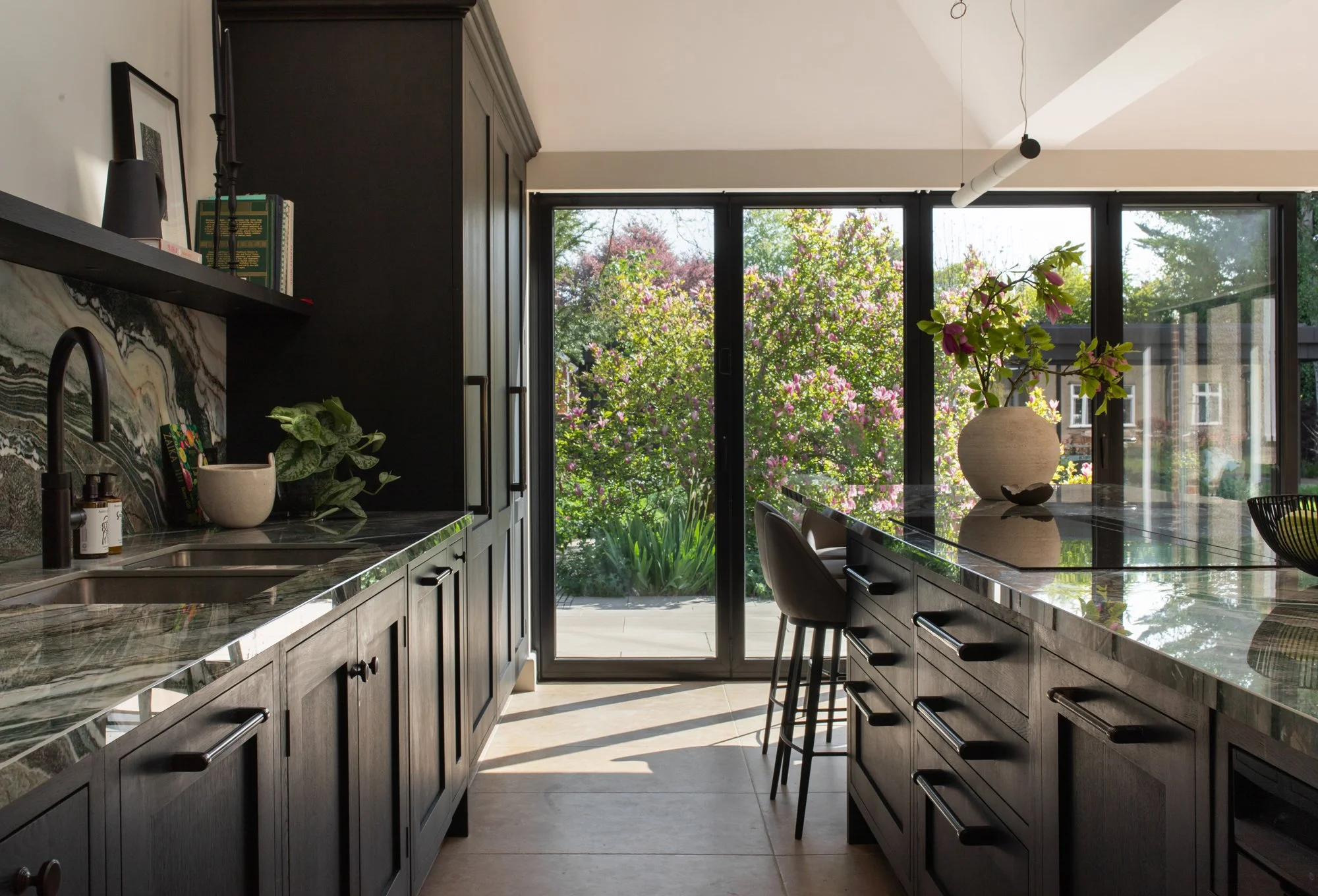
Does early involvement mean choosing everything immediately?
No.
Starting early does not mean deciding every cushion before the builders arrive.
It means establishing enough of the finished interior for the construction work to support it properly.
We would usually want to understand the furniture layouts, kitchen and bathroom direction, key joinery, lighting, flooring, principal materials and window-treatment requirements.
Decorative layers can continue to develop afterwards.
The important thing is separating decisions that affect the building from decisions that genuinely can wait.
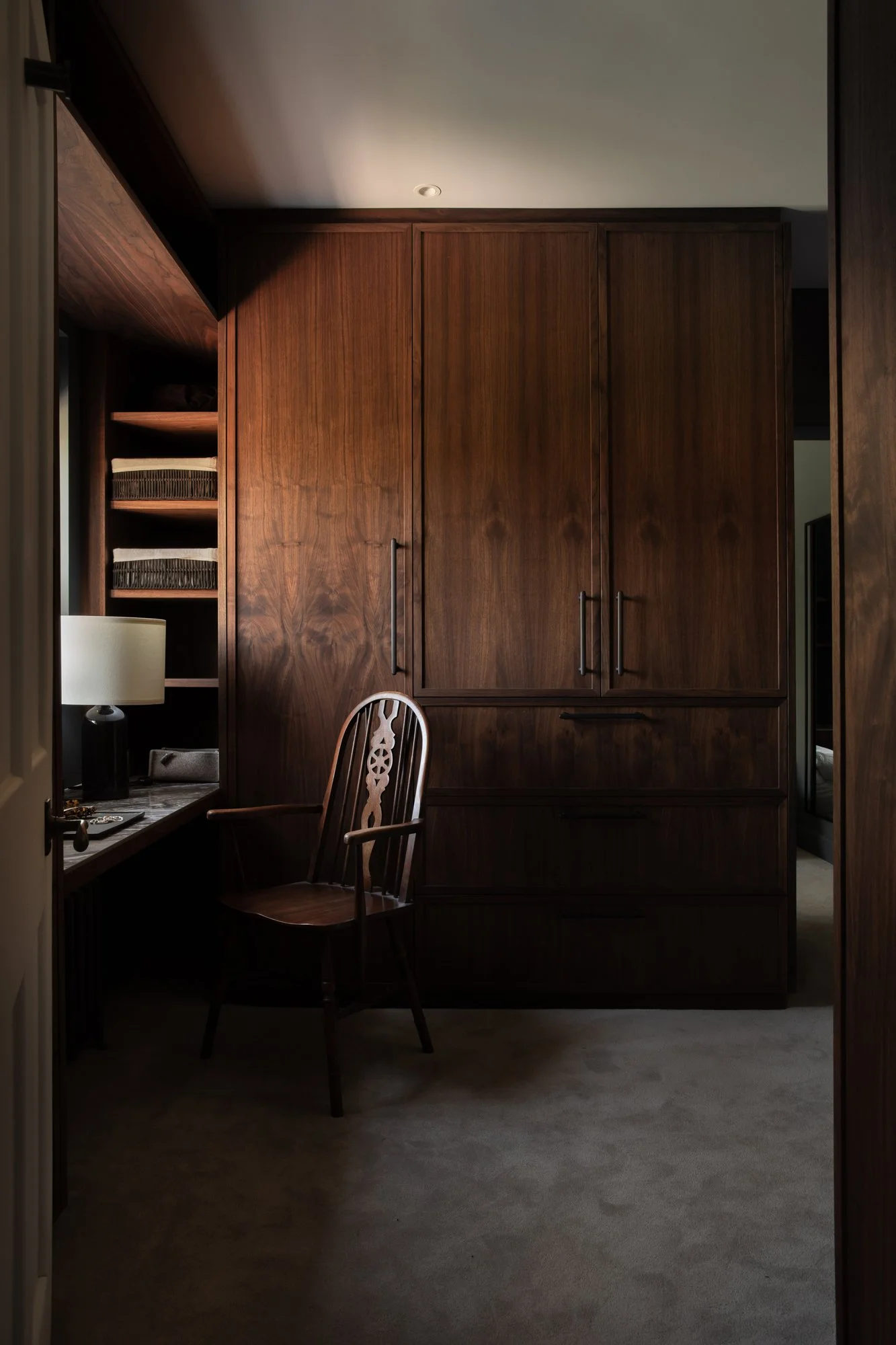
What if building work has already started?
An interior designer can still add considerable value.
We regularly become involved once architectural work is already established. The role simply becomes different.
Rather than influencing the earliest spatial decisions, we work within the agreed architecture and bring clarity to the remaining choices, identifying dependencies before they become urgent site questions.
The earlier we can do that, the more opportunity there is to create a coherent home rather than resolving rooms independently as construction progresses.
For a whole-house renovation, we would always recommend beginning the interior conversation sooner rather than later.
For clients undertaking a substantial renovation, our Full Service Interior Design service allows us to become involved from these early decisions through to furnishing and final installation.
