
Planning a Luxury Holiday Home: What to Consider Before You Furnish It
A well-designed holiday home has to do several things at once.
It should feel distinctive enough to make an impression, comfortable enough for guests to settle into immediately and robust enough to withstand regular use. For many owners, there is another consideration too: this may be a second home now, but one they intend to spend more time in themselves later.
Rather than furnishing purely for short-term guests, it becomes worth considering which decisions should serve the property for the next ten or twenty years, where quality matters most and how the house can feel generous without becoming precious or impractical.
The best time to think about these questions is before furniture is ordered and, ideally, before renovation decisions are finalised. For an example of how these decisions come together in practice, see our Fowey Townhouse holiday-home project.
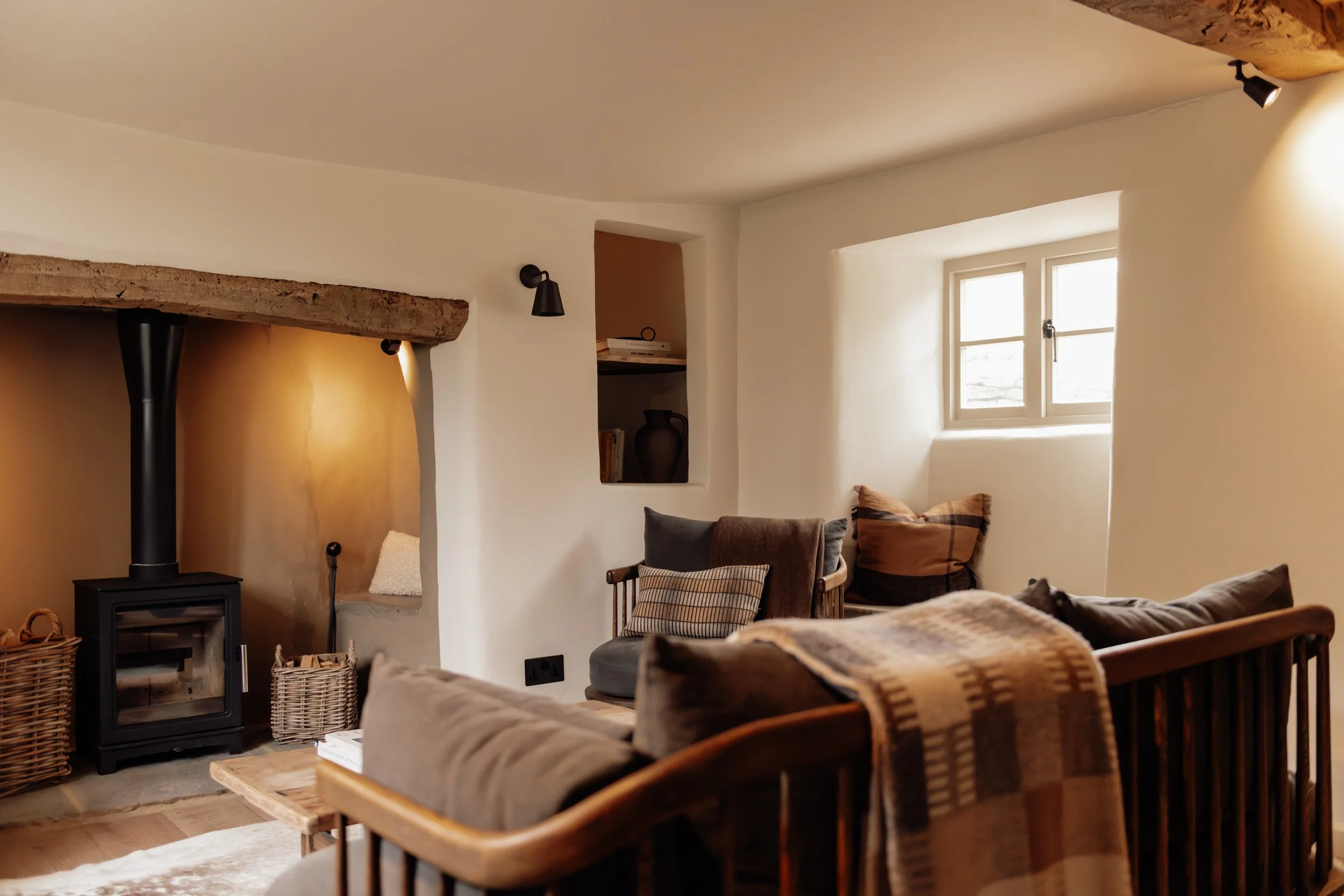
Begin with the future of the property
Before thinking about sofas, fabrics or bedroom schemes, establish what role the house is going to play.
Is it primarily an investment property? A family second home that will be let when you are not using it? Somewhere you expect to spend increasing amounts of time? Or potentially a future permanent home?
The answer should influence how you furnish it.
If you know that you may eventually live in the house yourselves, it can make sense to invest in certain principal pieces with your own future use in mind. A beautifully made dining table, a particularly good bed, an antique chest or a bespoke piece of joinery can remain with the house through different chapters of its life.
Other items inevitably experience more wear and tear and can be selected accordingly.
It is also worth establishing the extent of the work required early on. Does the property need new kitchens and bathrooms, alterations to the layout and lighting, or is the project predominantly furnishing and decoration?
A clear view of the long-term intention for the property helps prevent short-term decisions that later need to be undone.
Think about your guests before you design for them
A house for eight adults needs to work differently from one primarily attracting young families.
Before planning rooms in detail, consider who you expect to stay. Will it mostly be families, couples or groups of friends? Will children and babies be accommodated? Are dogs welcome? Could people stay for longer periods and work remotely? Maximum occupancy matters, but so does the make-up of that occupancy.
A four-bedroom house may technically sleep eight, but the experience will be very different depending on whether that means four couples, two families with children or a multigenerational group. Those decisions affect bedroom configurations, dining space, seating capacity, bathrooms, storage and how flexible different rooms need to be.
The aim is not simply to fit the maximum number of people into the property. Guests need room for their lives to arrive with them, including luggage, coats, toys and the inevitable collection of things that accumulate during a stay.
Visual breathing room is valuable too. A holiday house should offer a sense of ease.
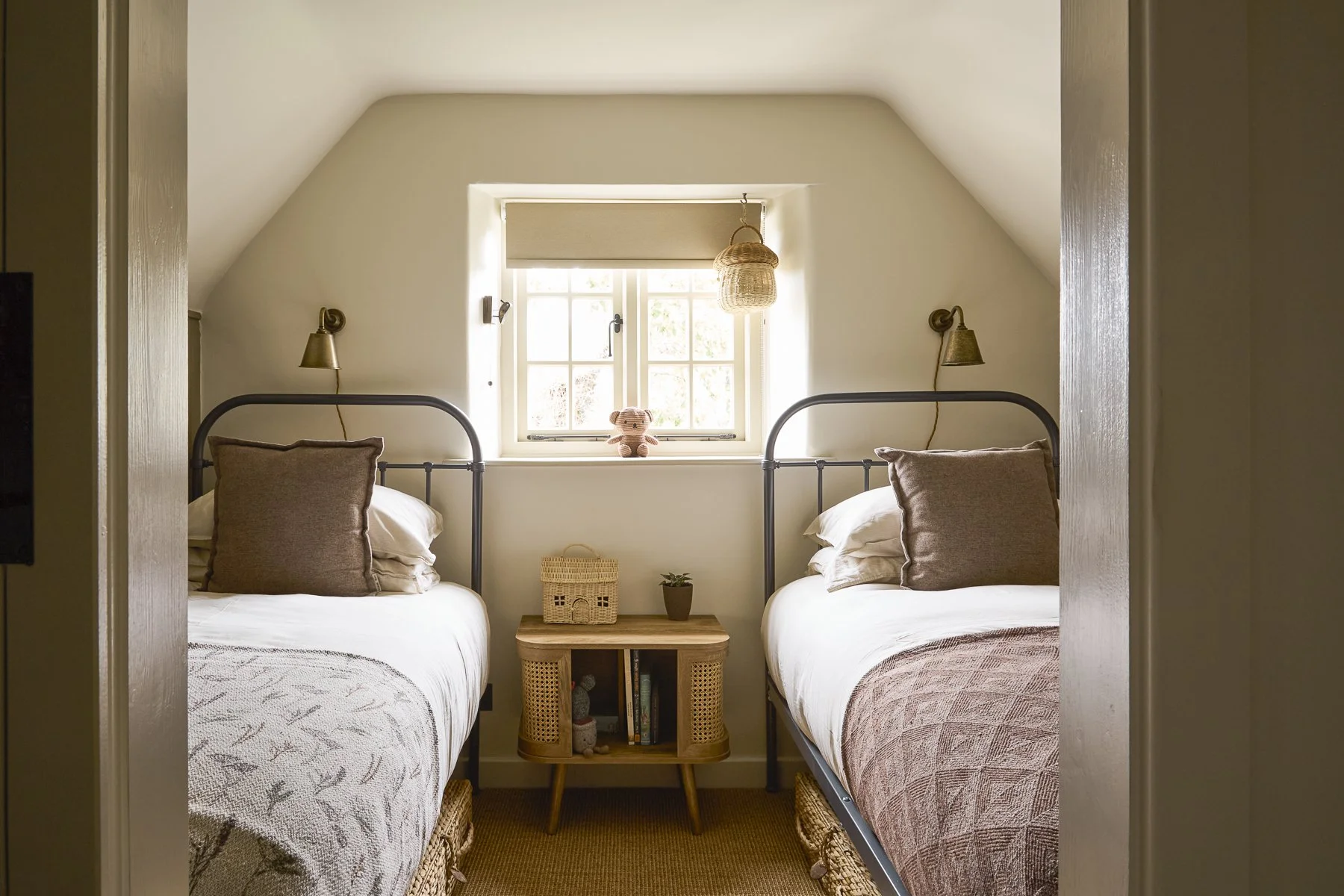
Consider how the house will actually work
Good holiday-home design is often found in the practical details guests barely notice.
At the entrance, there needs to be somewhere obvious for coats, boots and luggage. If dogs are welcome, their equipment needs a home too.
The dining table needs to seat the number of guests the property is designed for comfortably, rather than technically.
A main sitting room might be more conversational, with books, games and comfortable seating, while a second snug could accommodate television, children or occasional work.
If there is an attic, basement or outbuilding, think carefully about whether it could give the property something more distinctive. A games room, bar, yoga space or quiet workspace can add another dimension to the stay when it genuinely suits the house and the guests you want to attract.
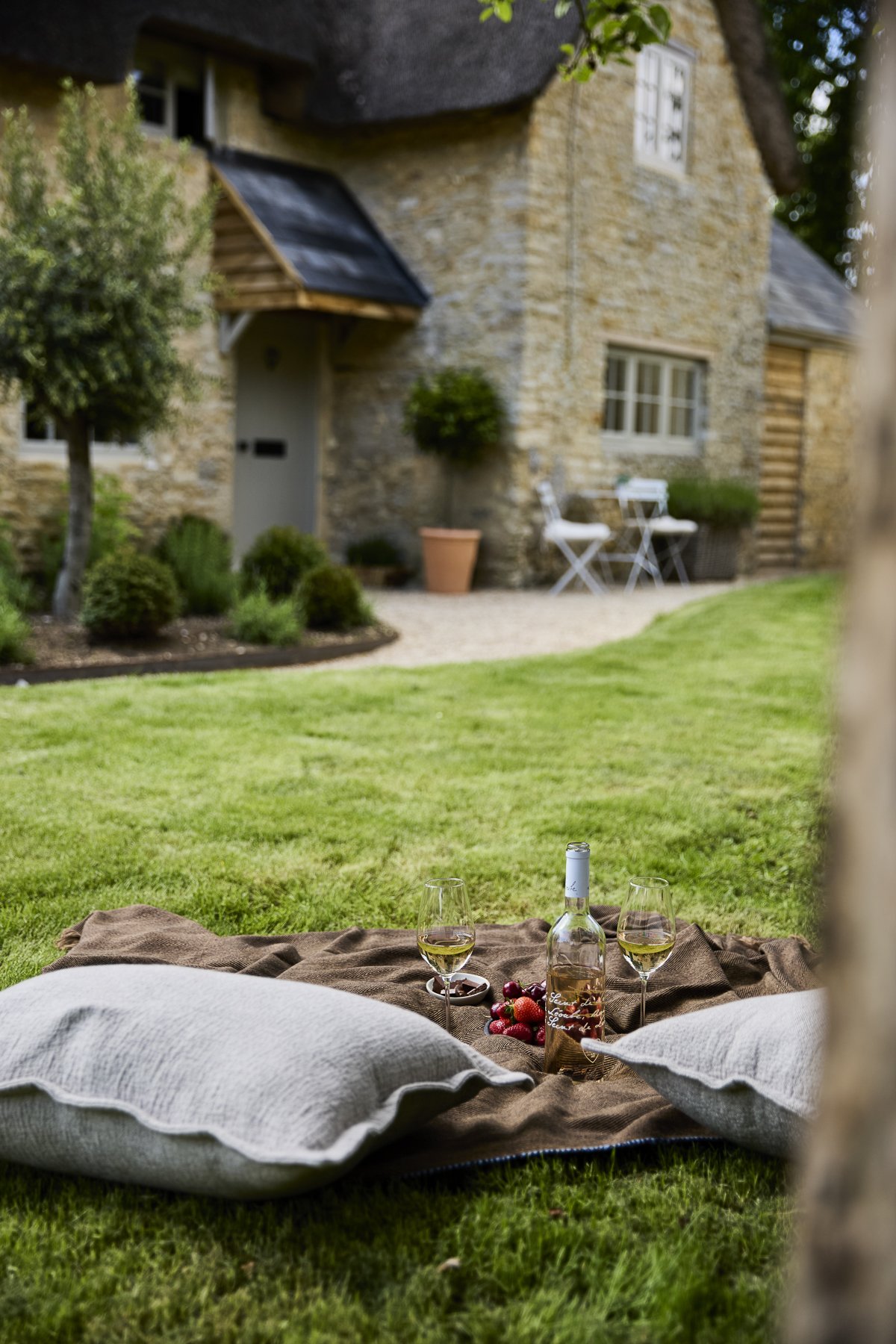
The garden should be considered as another living space rather than an afterthought. Outdoor dining, comfortable seating, shade and somewhere to gather in the evening can materially change how the property is experienced during warmer months.
Each decision should come back to the same question: how do we want people to live here?
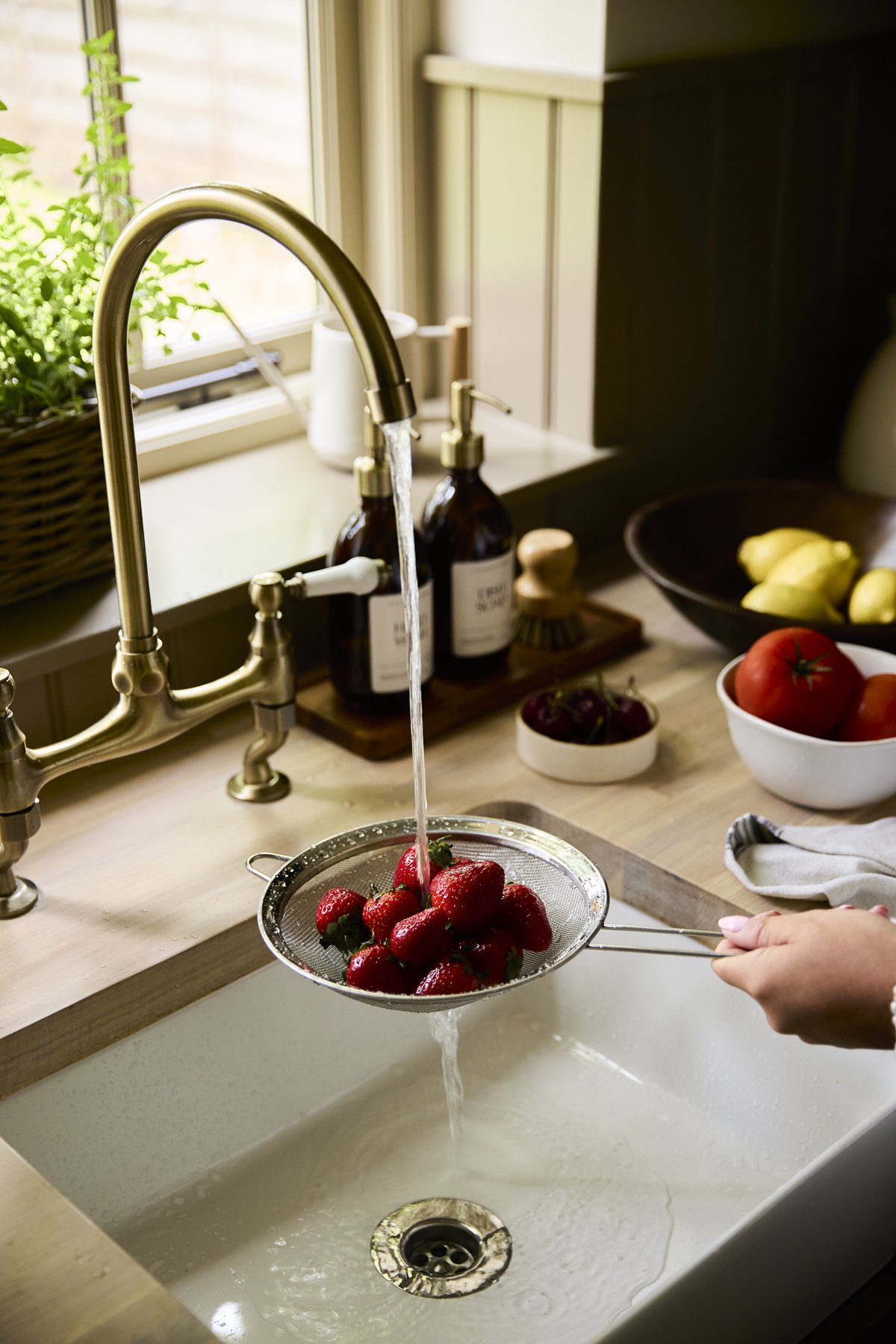
A holiday-home kitchen should feel properly usable
Guests notice when a kitchen looks beautiful but does not work.
For a high-quality holiday home, especially somewhere more rural where guests may cook regularly, the kitchen should be comprehensively equipped.
That does not mean every utensil needs to be expensive. It means people should be able to arrive, cook a proper meal and find what they need without improvising.
Think about serving bowls, knives, pans, glassware, kitchen utensils and enough crockery and cutlery for a full house.
Storage also matters. Some cupboards need to be available to guests while others may need to accommodate housekeeping supplies, replacement items or owner belongings.
If the property will also be your second home, consider separating private storage from guest storage from the outset. A discreet locked cupboard or dedicated owner area is much more elegant than continually removing personal belongings between stays.
Give bedrooms more thought than almost any other room
Sleep is a large part of how guests judge a stay.
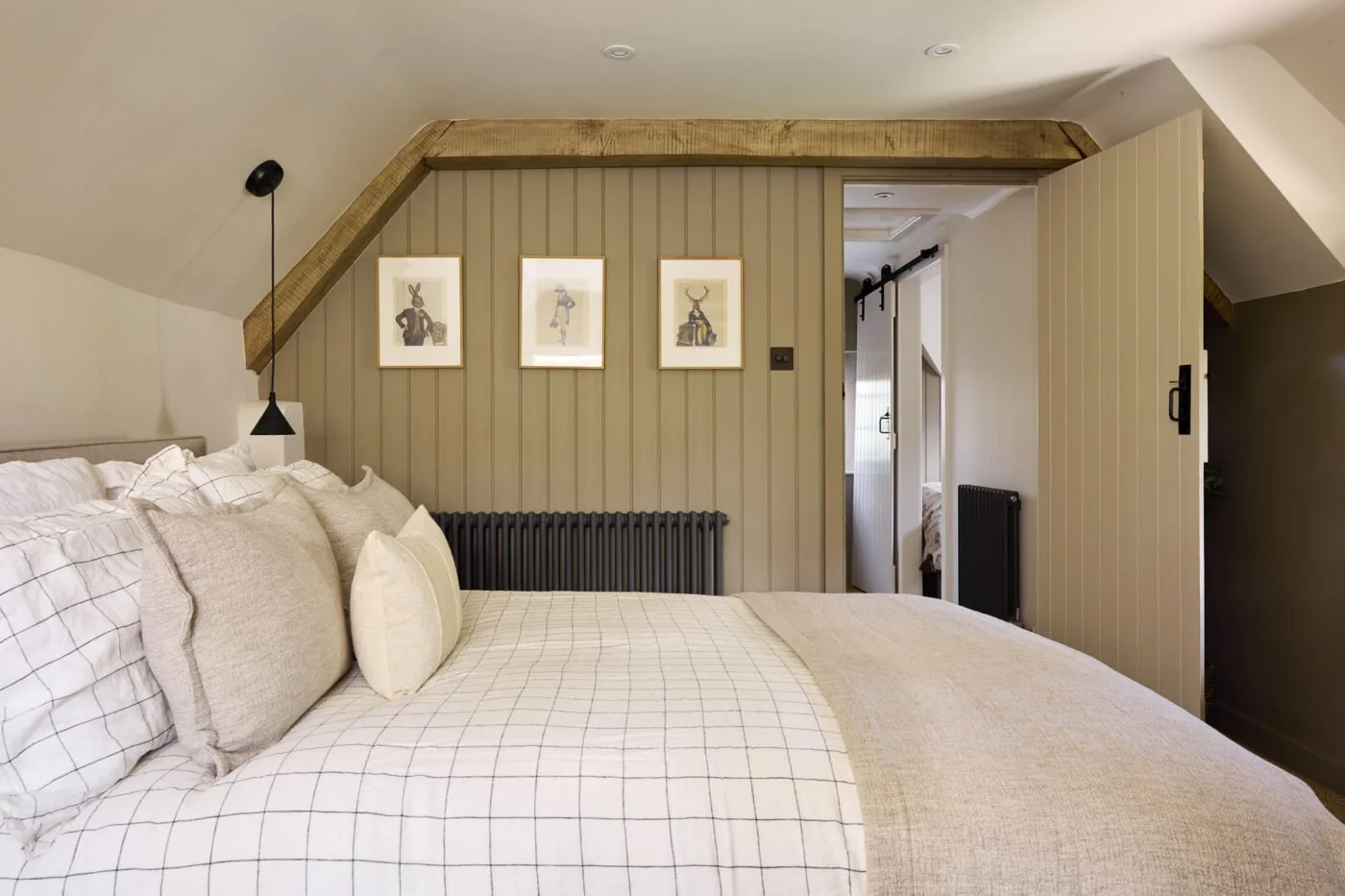
We would prioritise good mattresses, generous beds where the room allows, quality bed linen and pillows that provide different levels of support. Where the guest profile is varied, a twin or zip-and-link room can offer useful flexibility. Divan bases can also provide concealed storage for spare bedding or turnaround items where space is limited.
It is worth considering wardrobes in the context of both guest use and your own future use of the property. Guests staying for a long weekend need relatively little hanging space. Owners spending several weeks there may need considerably more.
Bathrooms should be considered in the same way.
An en-suite to the principal bedroom can improve privacy in a larger house, while a bath remains particularly valuable where families are likely to stay.
Where the architecture allows, one memorable bathroom element can also give the property a stronger identity, provided it is practical to maintain.
Decide where quality matters most
A holiday home does not require every object to carry the same level of investment.
In fact, a sensible FF&E budget usually differentiates between things that should last, things guests physically interact with and things that are inevitably more replaceable.
We would be inclined to invest in the bed, mattress, principal upholstery, dining table, key lighting, well-made window treatments and pieces that contribute meaningfully to the character of the house.
Bedding and towels are particularly tactile. Guests experience them directly, so quality tends to be noticed.
At the other end of the spectrum, glassware and crockery are more likely to break. They can still be attractive and appropriate to the scheme without being so precious that every replacement becomes an issue.
Antiques and vintage pieces can work very well in holiday homes too.
They bring individuality and a sense of permanence that is difficult to achieve when every piece has been bought new at the same time. The key is choosing them thoughtfully and placing more delicate pieces where they are less vulnerable to heavy use.
If you are establishing the wider investment for the property, our guide to budgeting for the furnishing of a whole house explains what should sit within an FF&E allowance.
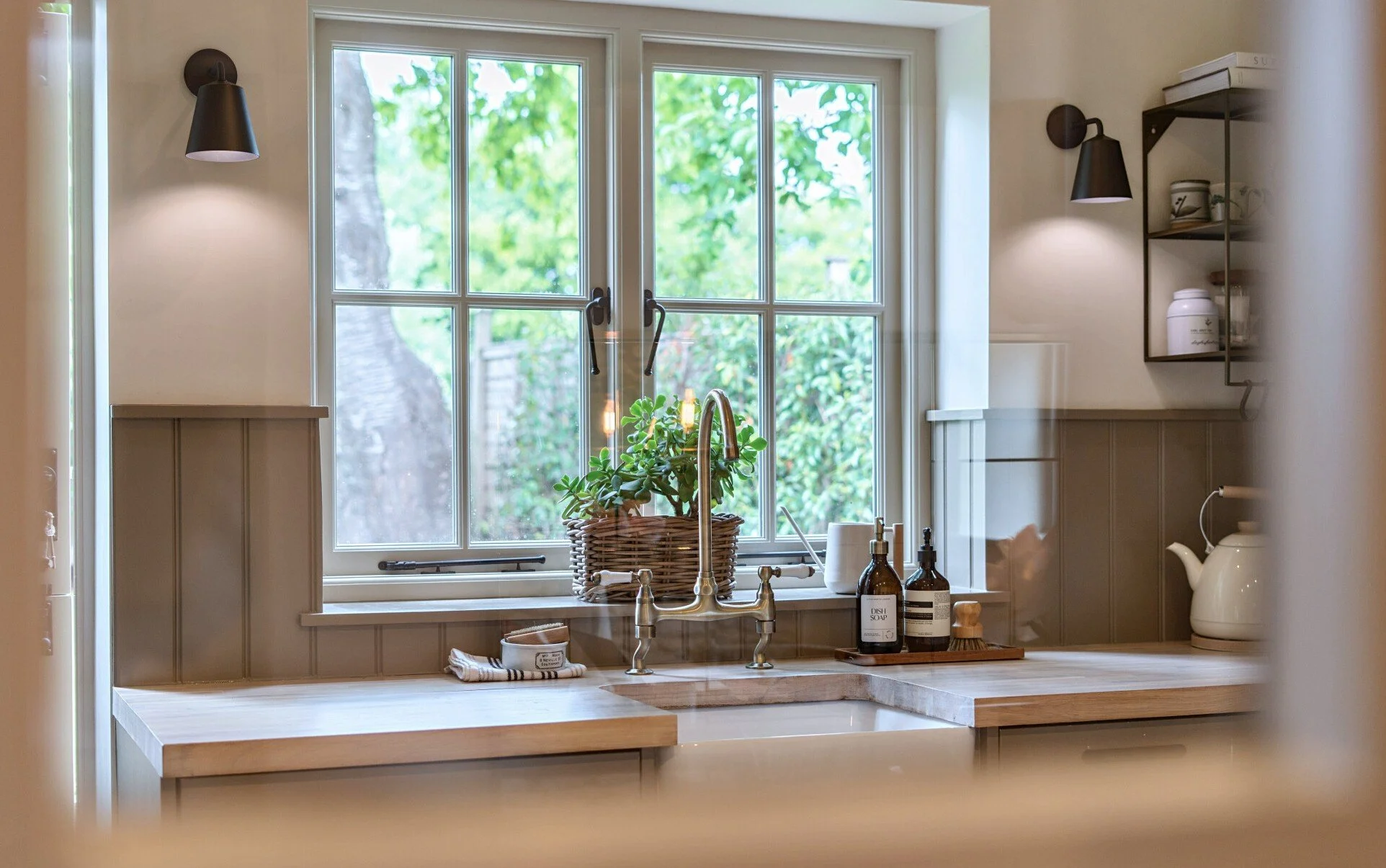
Durability should not make the house feel commercial
A holiday home inevitably works harder than a private home.
Suitcases are dragged through entrances. Drinks are placed on tables without coasters. Dining chairs encounter spills. Curtains and blinds are operated by people unfamiliar with them. Materials need to acknowledge that. Hard-wearing flooring is particularly useful through entrances, hallways and other high-traffic spaces. Rugs can then add softness in places where they can be cleaned or replaced more easily.
Paint finishes should be practical enough to wipe down where required. Upholstery needs to suit the amount of use it will receive. Dining chairs and occasional tables should tolerate the realities of food and drink. Window treatment mechanisms and lighting controls should be simple and robust. What we would avoid is allowing durability to dictate the whole aesthetic.
Natural timber, wool, linen, stone and aged metals can often become more appealing with use when chosen well. The goal is a home that can age gracefully rather than one that needs to remain untouched to look good.
Leave enough space
There can be a tendency when furnishing a holiday home to make sure every corner contains something.
We would resist that - Guests arrive with suitcases, coats, shopping bags, children's belongings and sometimes dogs. They need somewhere for those things to go. Rooms also feel more generous when furniture is allowed some space around it.
For a higher-end property, this is particularly important. A sense of calm and ease often comes from what has been left out as much as what has been included. You do not need another occasional chair simply because there is an empty corner.
A well-proportioned room with a few excellent pieces will usually feel more confident than one filled to capacity.
Create moments people will remember
A successful holiday home should have something particular about it.
That might be the view from a freestanding bath, a beautiful principal bedroom, a fireplace surrounded by comfortable seating, an outdoor dining area overlooking the garden or a bar hidden within bespoke joinery.
These moments are valuable because they shape people's memory of the house.
They also naturally become the places guests photograph and share.
The important thing is that they emerge from the property itself rather than feeling as though they have been created solely for a photograph. The architecture, setting and way the house is used should lead the idea.
See the completed Fowey Townhouse project for a closer look at how we approached a family holiday home overlooking the Cornish coast.
Think about the guest experience beyond the furniture
The interior is only one part of how a property feels to stay in.
Consider what happens from the moment guests arrive.
Is it immediately clear where to park, enter and leave coats? Is the lighting simple to operate? Can they make a good coffee without reading instructions? Is there somewhere obvious to sit outside? Can they find extra pillows or a blanket without contacting somebody?
Small decisions can make a considerable difference.
A locally sourced welcome hamper can introduce the area and establish the tone of the stay. Straightforward coffee-making facilities are generally more useful than complicated equipment. Simple heating and lighting controls reduce unnecessary frustration.
Luxury, in this context, is often about ease.
Guests should feel that the house has anticipated what they need.
Plan the operation alongside the interior
The practical running of the property should influence the design from the beginning.
Where will spare linen be kept? Where do housekeeping supplies live? What is locked away between stays? How quickly can the house be turned around? Which pieces require specialist cleaning?
If outdoor cushions need to be moved every time it rains, there needs to be somewhere convenient to put them.
If a house sleeps a large number of people, there needs to be enough storage for the linen associated with that occupancy.
If owners intend to keep personal belongings at the property, that storage needs to be planned deliberately rather than found later.
The same applies to features such as fire pits, hot tubs and wood burners. They may add considerably to the experience, but they also introduce additional maintenance, cleaning and management considerations.
The design decision should therefore consider the whole operational picture.
Consider how the property will be positioned
If the house will be let, think about its positioning before the interior is complete.
There is a difference between furnishing a property for broad holiday-let appeal and creating something intended to sit within a more selective, design-led part of the market.
Higher expectations usually require greater attention to the consistency of the experience, from the quality of the interiors and photography to housekeeping and guest communication.
That initial investment should be considered as part of the property's wider positioning rather than simply as a furnishing cost.
The same principle applies to photography.
The house may be styled more fully for its launch photography and then pared back slightly for day-to-day guest use. Good imagery should communicate the atmosphere of the property, but the real experience still needs to live up to it.
Planning or furnishing a second home or design-led holiday property? Kindly can help develop the interior from the early planning stages through to furniture sourcing, procurement, installation and final styling.
