
How Much Should You Budget for Furnishing a Whole House?
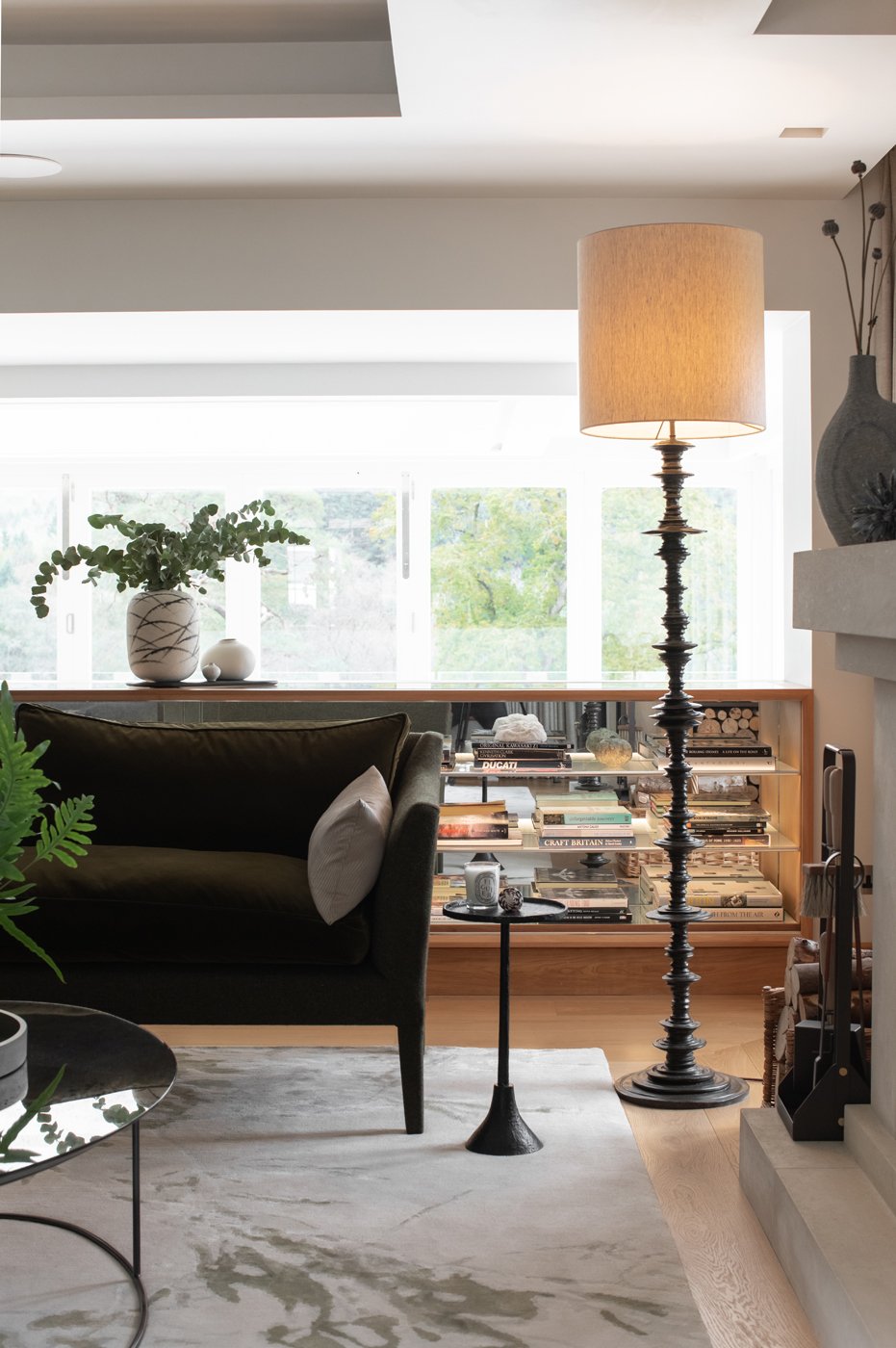
One of the most difficult parts of planning a whole-house interior is understanding what “the furnishing budget” actually needs to include.
Furniture is only one part of it.
Across a complete home, the FF&E budget may also need to cover rugs, decorative lighting, curtains and blinds, artwork, mirrors, accessories, delivery, storage and installation.
That is why applying an arbitrary figure per room can quickly become misleading.
Start with the complete house
We prefer to establish an overall furnishing budget before individual pieces are selected.
This allows us to consider the property as a whole.
The principal bedroom might justify greater investment in the bed and window treatments. A drawing room may need several substantial upholstered pieces. A hallway might require relatively little furniture but benefit from one excellent console or piece of art.
Not every space needs the same level of expenditure.
A whole-house cost plan allows investment to move towards the places where it will make the greatest difference.
What does a furnishing budget include?
For a substantial home, it can include considerably more than sofas and dining chairs.
There may be:
furniture
rugs
decorative lighting
curtains and blinds
bespoke upholstery
occasional bespoke furniture
artwork and mirrors
accessories
delivery and specialist handling
storage
installation and styling
Individually, some of these can appear relatively modest. Across a complete property they become a meaningful part of the project.
Understanding them early gives a much more realistic view of the investment required.
Where should you spend more?
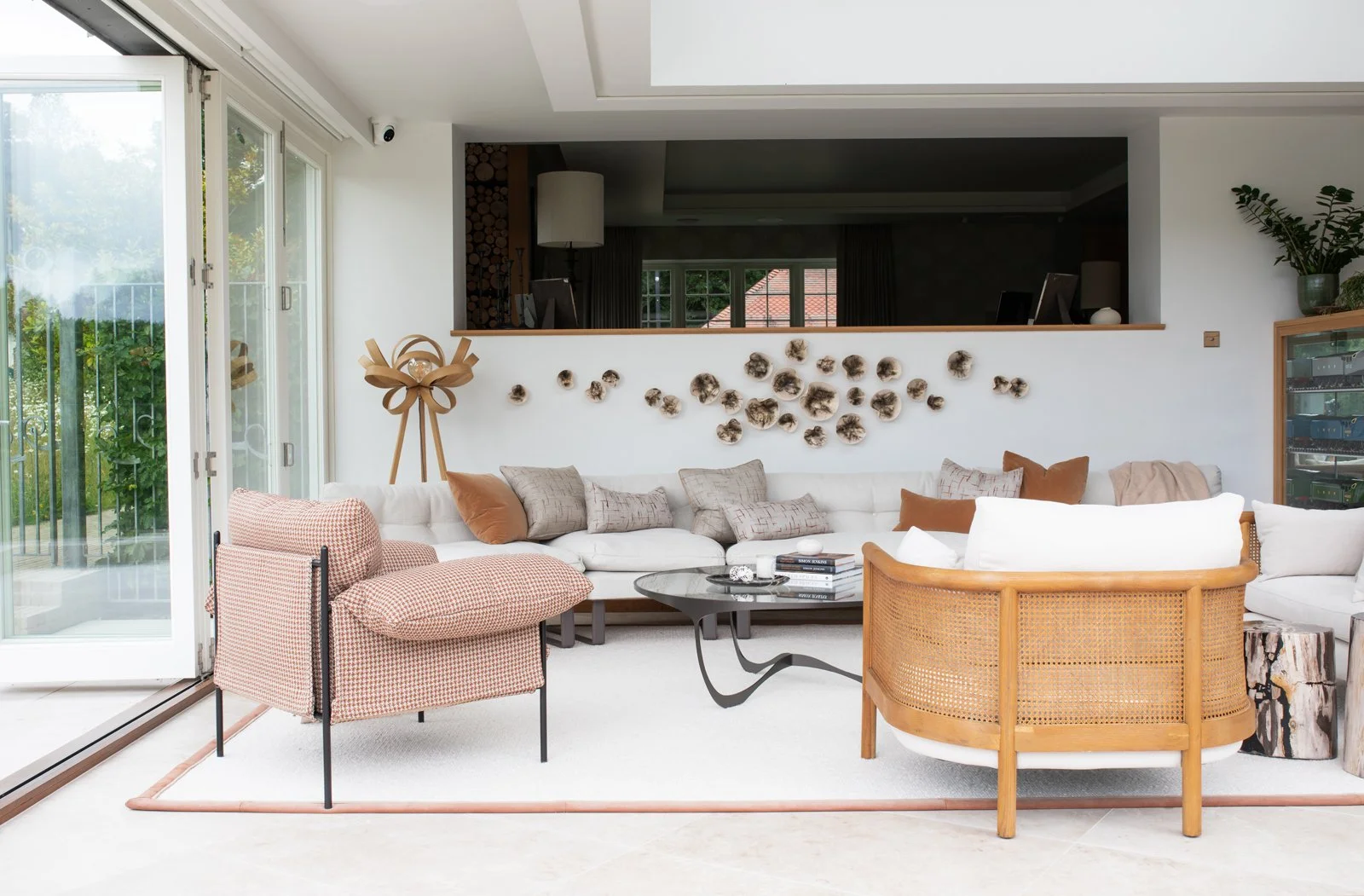
The answer depends on the property and household, but we tend to prioritise pieces that are heavily used, visually important or difficult to replace.
A sofa used every evening deserves careful consideration.
So does a dining table that will sit at the centre of family life for decades.
Well-made curtains can fundamentally change the way a room feels. A properly sized rug can anchor an entire furniture arrangement. Bespoke joinery can sometimes solve storage, proportion and architectural issues at the same time.
There are other areas where something simpler will work perfectly well.
Thoughtful design is not about specifying the most expensive version of everything.
It is about understanding where quality, craft or something made specifically for the house will materially improve the finished interior.
Why does furniture need to be budgeted before construction finishes?
Because furnishing decisions often affect the architecture.
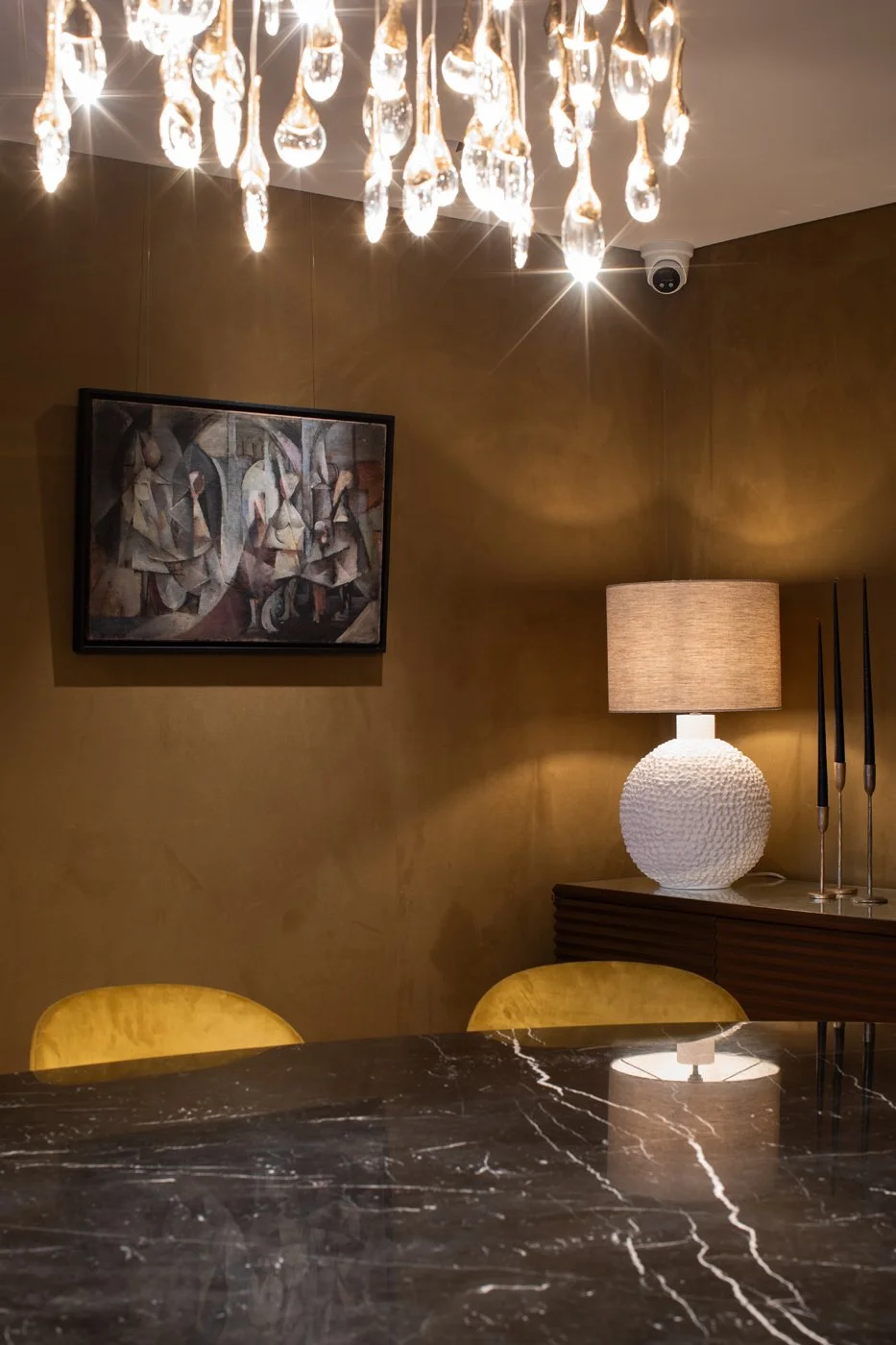
Furniture layouts inform electrical positions and circulation. Decorative lighting needs power in the right place. Window treatments may affect ceiling details. Bespoke furniture and joinery can require coordination with several trades.
There are also lead times.
A piece that takes twelve or sixteen weeks to make needs to be considered well before the room is decorated and waiting for furniture.
The furnishing budget therefore belongs within the wider renovation conversation, rather than being left until the building work is nearly complete.
A clear budget creates freedom to make better decisions.
It also makes it easier to distinguish between the things worth investing in and the places where restraint is entirely appropriate.
Planning the complete furnishing of a home? Kindly develops FF&E alongside the wider interior, then manages sourcing, procurement and installation as part of our full-service projects.
