
How to Create an Interior That Feels Connected to the Cotswolds Landscape
The Cotswolds has a very particular sense of place, but creating an interior that belongs here does not mean filling a house with obvious references to the countryside.
We are more interested in the quieter relationship between a home and its surroundings: the colours already present in the landscape, the natural variation of local materials, the quality of the light and the way views are experienced from inside the house.
When those things are considered carefully, an interior can feel deeply rooted in its setting without becoming themed or overly rustic.
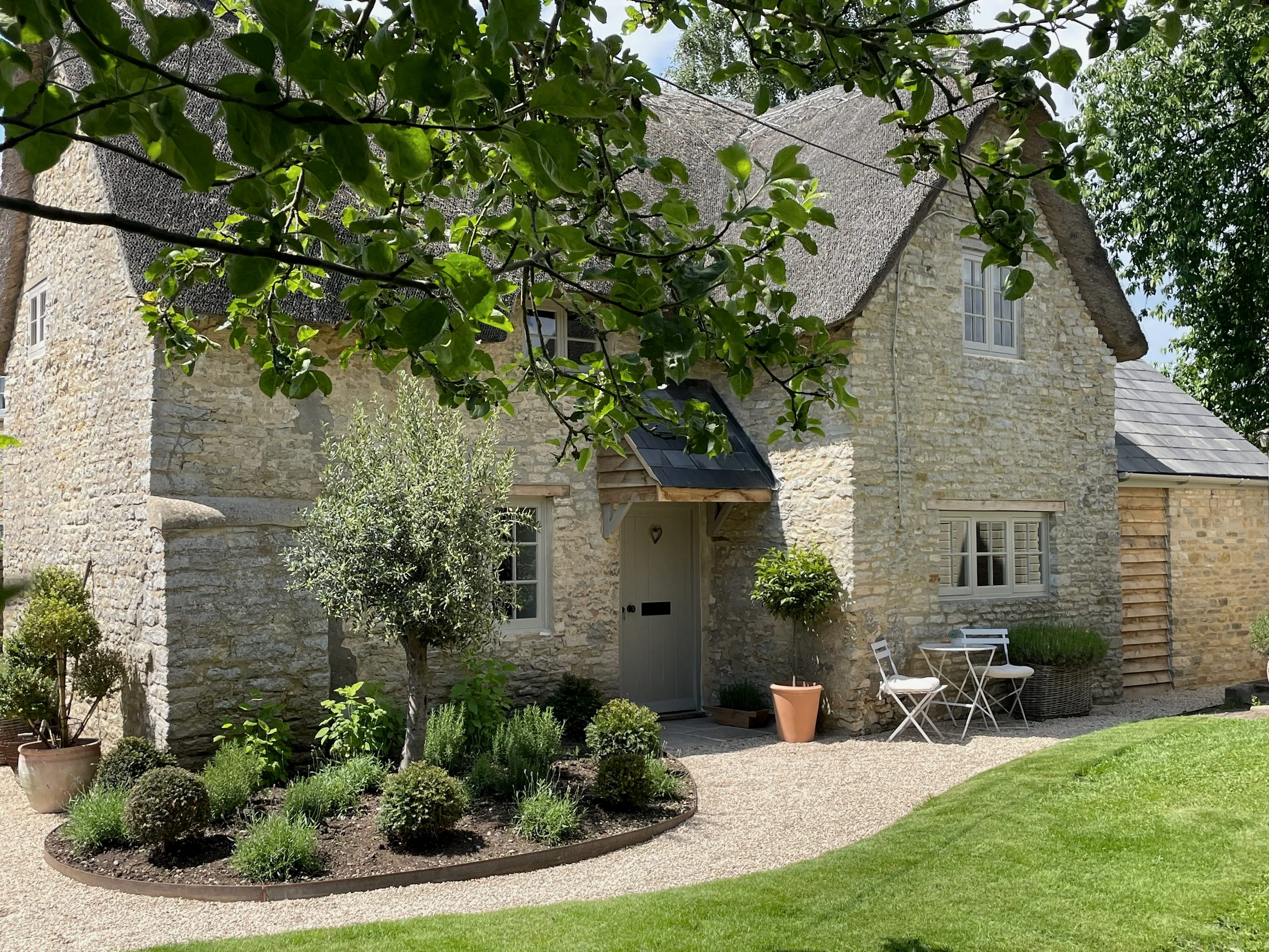
Start with what surrounds the house
The landscape often provides a natural starting point for a palette. Cotswold stone contains far more variation than a single shade of beige. There are warm honey tones, cooler greys, mineral colours and deeper earthy notes depending on the stone, age and light.
Alongside it, there may be aged timber, muted greens, soil tones, planting and changing seasonal colour. These do not need to be reproduced literally. Instead, we might take the warmth of the stone into a plaster finish, introduce a soft green through upholstery or use timber to bring some of the landscape's natural variation inside. The connection can be subtle.

Use materials that feel good alongside the architecture
Natural materials tend to work particularly well in country homes because their surfaces are not entirely uniform. Timber has grain and movement. Linen softens with use. Wool brings texture. Stone varies from piece to piece. Aged metals change over time. These qualities sit comfortably within buildings that already have a sense of age and material depth. These materials are also an important part of our approach to modernising period Cotswolds homes, where new elements need to sit comfortably alongside historic fabric.
We often layer several quieter textures rather than relying on strong pattern or decoration to create interest. The result feels richer up close but calm when seen as a whole.
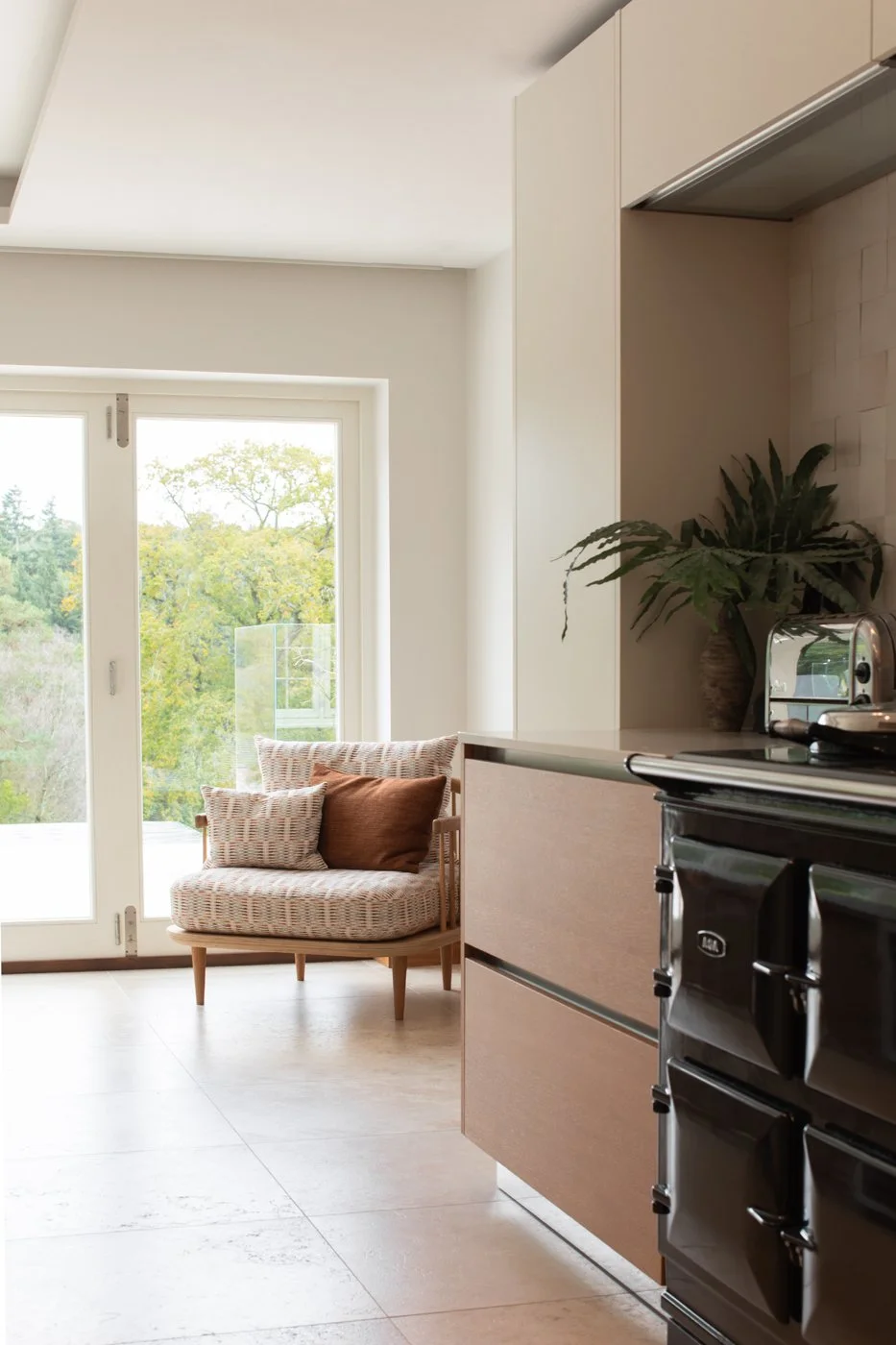
Consider the view as part of the room
A beautiful view is not only something to look at through a window. It can influence how a room is planned.
The position of a sofa, armchair or dining table can determine whether the garden or wider landscape becomes part of everyday life. Sometimes a small shift in orientation completely changes the experience of a room. Rather than automatically placing furniture against walls, we consider what you will actually see when sitting, eating, working or walking through the space.
Views can also inform sightlines between rooms. An opening might frame the garden beyond, or a sequence of spaces might gradually draw the eye towards the outside.
Let window treatments support the view
Window treatments have an important practical role, providing privacy, softness and control over light. They can also affect the relationship between a room and its surroundings. Heavy or unnecessarily complicated treatments can obscure deep window reveals or interrupt a particularly good outlook. In other spaces, generous curtains can bring softness and warmth that the architecture needs. The right solution depends on the room, the orientation and how it is used.
We consider how the treatment will look both open and closed, what it will do to the light and whether it allows the architecture of the window itself to remain visible.

Pay attention to changing light
Country houses can feel very different throughout the day and throughout the year.
A room that is bright and open in summer may become quieter in winter. South-facing spaces behave differently from rooms receiving cooler northern light. Stone, timber and paint can all change considerably as the light shifts. That is why we prefer to consider colours and materials in the property itself rather than in isolation. Samples need to be seen against existing stone, flooring and timber, and at different times of day. Sometimes the right decision is to work with a darker room rather than trying to force it to feel brighter. A deeper tone, tactile fabric or warmer lighting can create an atmosphere that feels intentional.
Connect the inside and outside through movement
The relationship with the landscape is also about how you move through the house.
Which door do you naturally use to reach the garden?
Where do muddy boots come off?
Is there somewhere to sit after coming inside?
Can you move easily between a kitchen or dining space and an outdoor area when hosting?
These practical details matter because they determine whether the connection with outside is part of everyday life rather than simply something seen through glass. A house that responds well to its surroundings should make living with the landscape feel easy.
Let the location inform the interior quietly
We do not think a Cotswolds interior needs to announce where it is.
The strongest connection often comes from something much less literal: a material palette that feels right against the stone, furniture positioned towards a view, fabrics that respond beautifully to changing light and rooms that relate naturally to the garden.
Those decisions create a sense that the interior belongs to the building and that the building belongs to its setting.
For us, that is far more enduring than trying to recreate a particular idea of a country house.
If you are considering these questions as part of a larger project, our guide to planning a Cotswolds renovation looks at the decisions worth making before work begins.
If you are renovating or furnishing a home in the Cotswolds, Kindly’s Full Service Interior Design can help develop an interior that responds naturally to the architecture, landscape and way you want to live.
